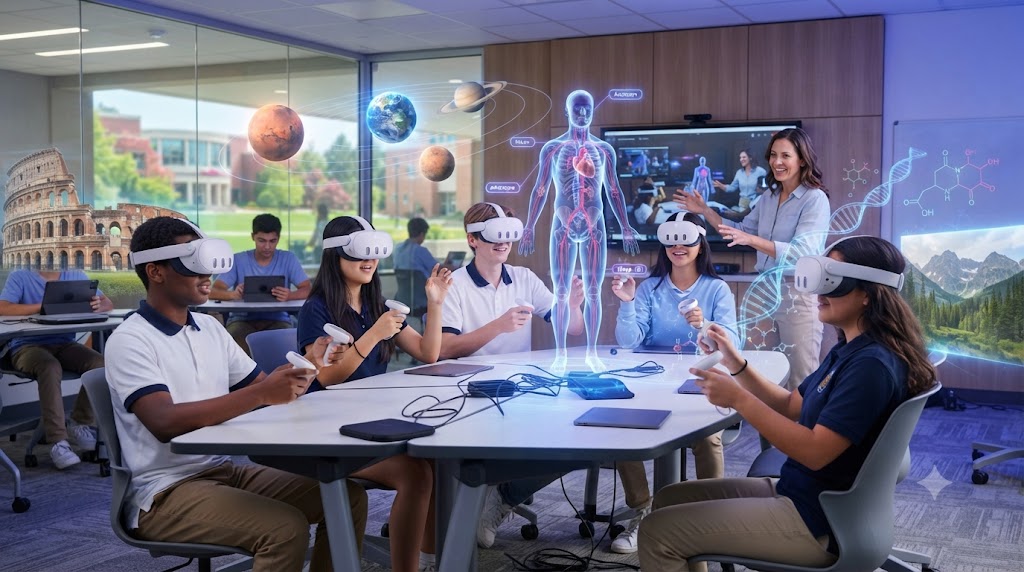
🥽 Virtual Reality in Education: Creating Immersive Learning Experiences
Imagine a student exploring ancient civilizations without leaving the classroom, examining the human heart in three dimensions, walking across the surface of Mars, or practicing a complex technical procedure inside a safe virtual environment.
This is the promise of virtual reality (VR) in education.
Virtual reality is moving beyond entertainment and becoming an increasingly interesting educational technology. By creating computer-generated environments that students can explore and interact with, VR can transform some lessons from passive experiences into immersive activities.


However, VR is not simply about putting a headset on a student. Its educational value depends on how thoughtfully the technology is connected to curriculum goals, teaching methods, accessibility, and student needs.
🥽 What Is Virtual Reality in Education?
Virtual reality uses digital technology to create an interactive environment that can give users the feeling of being inside a simulated world.
In education, students can use VR headsets and other devices to explore environments that may be difficult, expensive, dangerous, or impossible to experience physically.
A history class might use VR to explore a reconstruction of an ancient city. A biology lesson could allow students to examine a three-dimensional model of the human body. Geography students could explore landscapes and ecosystems.
The objective is not simply to make lessons visually impressive. The goal is to create experiences that help students understand concepts more deeply.
🌍 Learning Through Experience
Traditional education often relies on explanations, diagrams, photographs, videos, and textbooks.
These methods remain valuable, but VR adds another possibility: experiential learning.
Instead of simply reading about the solar system, students could explore a virtual planetary environment.
Instead of looking at a diagram of a volcano, they could examine a simulated volcanic landscape.
Instead of reading about architectural structures, students could walk through virtual versions of them.


This ability to explore can make abstract subjects more tangible.
🧠 How VR Can Support Engagement
One potential advantage of VR is its ability to create an immersive environment.
When students interact directly with a virtual setting, they may become more actively involved in the learning activity.
A lesson can become a sequence of exploration, observation, decision-making, and problem-solving rather than simply listening to an explanation.
For example, a science lesson could ask students to identify different organisms within a virtual ecosystem. Students would not merely memorize definitions; they would observe relationships between elements in the simulated environment.
🔬 VR for Science Education
Science is one area where immersive learning can be particularly useful.
Students can explore microscopic structures, examine astronomical environments, investigate geological formations, or conduct simulated experiments.
Virtual laboratories can also provide controlled environments for practicing procedures.
For subjects where physical equipment is expensive or difficult to access, simulations may provide an additional learning opportunity.
VR does not necessarily replace real laboratories. Instead, it can supplement physical experimentation by allowing students to practice concepts before working with real equipment.
🫀 Medical and Healthcare Education
Healthcare education involves many situations where students need opportunities to understand anatomy, procedures, and decision-making.
VR can create three-dimensional representations of anatomical structures and simulated clinical environments.


Students may be able to examine organs from different angles, explore body systems, or practice certain simulated procedures.
Such technology can provide additional practice opportunities without requiring every learning activity to involve a real patient or physical facility.
For professional training, however, VR should generally be viewed as one component of a broader educational program rather than a universal replacement for supervised practical experience.
🏛️ History and Social Studies
History can sometimes feel distant when students encounter it primarily through dates, names, and written descriptions.
VR can provide another way to explore historical contexts.
Students could virtually examine reconstructed buildings, ancient settlements, museums, archaeological environments, or historically significant locations.
A virtual environment can help students visualize scale, architecture, geography, and daily life.
Teachers can then connect the experience to historical documents, evidence, discussion, and critical analysis.
The technology should support historical understanding rather than presenting a simulation as unquestionable historical reality.
🌌 Geography and Virtual Field Trips
Field trips can provide valuable educational experiences, but they are not always practical.
Travel costs, distance, safety, accessibility, and scheduling can limit opportunities.
Virtual reality can create alternative field-trip experiences.
Students might explore coral reefs, rainforests, glaciers, deserts, museums, archaeological sites, or outer-space environments.


Virtual field trips can also introduce students to places that would otherwise be inaccessible to them.
🧑🔬 Simulations for Practical Skills
Some skills are best learned through practice.
VR can create simulated environments where students can repeatedly perform tasks, make decisions, and learn from mistakes.
This can be useful in areas such as engineering, technical training, emergency response, aviation, healthcare, and vocational education.
A virtual simulation can allow learners to encounter scenarios without the same immediate consequences associated with making mistakes in a real-world environment.
However, simulation quality matters. Poorly designed experiences may teach unrealistic procedures or create a false sense of competence.
🎨 Creativity and Design
VR can also become a creative environment.
Students can construct three-dimensional objects, design spaces, explore virtual sculptures, create artistic environments, and experiment with digital models.
Architecture and design students can potentially walk through their own creations before physical construction.
Art students can experiment with three-dimensional forms that would be difficult to produce using traditional materials.
This makes VR not only a consumption technology but also a creation tool.
🤖 VR and Artificial Intelligence
The combination of VR and artificial intelligence could make immersive education more adaptive.
AI systems can potentially provide virtual tutors, generate scenarios, adjust challenges, or respond to student actions.
Imagine a language-learning environment where students enter a virtual café and practice conversations with AI-driven characters.
Or consider a science simulation where the virtual environment changes based on the student’s decisions.
These technologies could create increasingly personalized learning experiences.
Nevertheless, AI-generated content should be reviewed for accuracy and educational appropriateness.
👩🏫 The Teacher’s Role Remains Important
It is easy to imagine VR as a technology that teaches students independently.
In reality, the teacher remains central to the learning process.
Before a VR activity, teachers can introduce the concepts students need to understand. During the experience, they can guide observation and discussion. Afterward, they can help students connect what they experienced with academic concepts.
A VR session without preparation or reflection may become little more than an interesting digital experience.
The educational value comes from the complete learning process.
📚 VR Should Support the Curriculum
Technology should not be introduced simply because it is impressive.
Teachers can begin with a learning objective and then ask whether VR provides something valuable that another method cannot provide as effectively.
For example, if students need to memorize a definition, a VR environment may be unnecessary.
But if students need to understand spatial relationships, explore an inaccessible environment, or practice a complex scenario, immersive technology may offer additional value.
This principle can prevent technology from becoming a distraction.
⚠️ Challenges of Virtual Reality in Education
Despite its potential, VR faces several challenges.
💰 Cost
VR headsets, computers, software, maintenance, and technical support can require significant investment.
Schools with limited budgets may find large-scale implementation difficult.
🌐 Access
Students need appropriate hardware and software to participate. Differences in access can create inequalities between institutions and learners.
🤢 Physical Discomfort
Some users may experience motion sickness, eye strain, dizziness, or discomfort during VR sessions.
Educational institutions need appropriate usage guidelines and breaks.
🧑🏫 Teacher Training
Teachers need time and support to understand how VR works and how to integrate it into lessons effectively.
🔐 Privacy
VR systems can potentially collect information about users and their interactions. Privacy and data security therefore need careful consideration.
📚 Educational Quality
Not every VR application is academically useful. Schools need to evaluate content quality, accuracy, accessibility, and alignment with learning objectives.
♿ Accessibility and Inclusive Design
Educational technology should be designed for diverse learners.
Some students may have difficulty using headsets because of visual, physical, sensory, or other accessibility considerations.
Institutions should therefore provide alternative ways to participate when necessary.
VR should expand educational opportunities rather than create new barriers.
👥 Collaborative Virtual Reality
Although VR is often associated with individual experiences, it can also support collaboration.
Multiple students may participate in shared virtual environments where they solve problems, communicate, construct objects, or explore simulations together.


This could become particularly interesting for remote education, where students are geographically separated but need to work together.
📈 Measuring Learning Outcomes
An important question for educators is whether VR actually improves learning outcomes.
Engagement alone is not enough.
Students may enjoy an immersive experience without necessarily remembering the underlying concepts.
Educational institutions therefore need to evaluate whether VR activities improve understanding, retention, practical skills, problem-solving, or other intended outcomes.
Research and classroom assessment can help teachers determine where VR genuinely adds value.
🎓 What Students Should Know
Students should approach VR as a learning tool rather than simply an entertainment technology.
Before entering a virtual environment, they should understand the learning objective. During the activity, they should observe carefully and interact meaningfully.
Afterward, reflection is important.
Students can write notes, discuss what they observed, answer questions, solve related problems, or connect the experience to real-world situations.
This turns an immersive experience into a structured learning activity.
🔮 What Could the Future Look Like?
As hardware becomes more capable and educational software becomes more sophisticated, VR could become part of a broader ecosystem of immersive learning.
Students may move between physical classrooms, online platforms, augmented reality, virtual reality, simulations, and AI-powered educational environments.
Rather than replacing traditional education, these technologies could provide additional ways to explore difficult concepts.
The future classroom may therefore be less about choosing between physical and digital environments and more about selecting the right environment for a particular learning objective.
🌟 Conclusion
Virtual reality has the potential to make education more immersive by allowing students to explore places, objects, scenarios, and concepts that are difficult to experience through conventional teaching alone.
From science laboratories and medical training to historical exploration, virtual field trips, engineering simulations, and creative design, VR can provide new opportunities for experiential learning.
But successful VR education requires more than expensive headsets. It needs thoughtful curriculum design, trained teachers, accessible technology, reliable content, privacy protections, and meaningful assessment.
The most promising role for VR is therefore not to replace teachers or traditional learning. It is to expand what students can experience, practice, and explore.
When immersive technology is connected to strong teaching, it can become another powerful tool for helping students understand the world around them.
The Growing Importance of Lifelong Learning 📚🌱
Education has traditionally been associated with childhood, school, college, and university. For generations, many people followed a relatively straightforward path: complete formal education, find a job, build a career, and eventually retire.
Today, that model is changing.
Technology is transforming industries, new professions are emerging, workplace expectations are evolving, and knowledge is becoming outdated faster than ever. Skills that were highly valuable a decade ago may need to be updated, expanded, or replaced. At the same time, people are living and working in increasingly complex environments.
These changes have made lifelong learning more important than ever.
Lifelong learning refers to the continuous pursuit of knowledge, skills, experiences, and personal development throughout a person’s life. It can happen inside traditional educational institutions, but it can also happen through online courses, professional training, books, workshops, hobbies, mentoring, communities, practical experiences, and everyday exploration.


The idea is simple:
Learning does not have an expiration date.
Whether someone is 18, 35, 55, or 75, there are always opportunities to learn something new.
Lifelong learning can help people remain adaptable, develop confidence, discover new interests, improve career opportunities, and participate more actively in an increasingly changing society.
In this article, we explore why lifelong learning is becoming essential, how it benefits individuals and organizations, the role of technology, common barriers to continuous learning, and how anyone can develop a sustainable lifelong-learning mindset.
What Is Lifelong Learning? 🧠
Lifelong learning is the ongoing process of acquiring knowledge and developing skills throughout life.
It does not necessarily mean continuously earning degrees.
A person can be a lifelong learner by:
- Taking an online course
- Learning a new language
- Reading books
- Attending workshops
- Developing professional skills
- Learning to use new technology
- Studying history or science
- Learning a musical instrument
- Joining a professional community
- Practicing a new hobby
- Learning from mentors
- Participating in community activities
- Exploring unfamiliar subjects
This makes lifelong learning different from traditional education.
Formal education usually follows a structured curriculum, defined timetable, and recognized qualification.
Lifelong learning can be much more flexible.
A person might spend six months learning data analysis, then study photography for personal enjoyment, followed by a course in communication skills.
The learner decides what to learn, why to learn it, and often how to learn it.
Why Lifelong Learning Matters More Than Ever 🌍
The modern world changes rapidly.
Technological developments can transform workplaces in just a few years. Artificial intelligence, automation, cloud computing, digital communication, biotechnology, renewable energy, and other innovations are creating new opportunities while changing existing jobs.
This means education cannot end when someone receives a diploma.
A degree may provide a strong foundation, but professional growth often requires continuous development.
Consider someone who studied marketing several years ago.
Traditional marketing knowledge may still be useful, but today’s marketer may also need to understand social media, digital analytics, search strategies, content creation, automation, artificial intelligence, and changing consumer behavior.
The same pattern appears across many professions.
Doctors need to keep up with medical developments.
Teachers need to understand new educational technologies.
Engineers need to adapt to changing tools.
Managers need new approaches to leadership.
Designers need to learn new software.
Business owners need to understand changing markets.
Continuous learning allows people to remain adaptable.
1. Lifelong Learning Helps People Adapt to Change 🔄
Change is unavoidable.
The question is not whether people will experience change but how effectively they will respond to it.
People who continue learning may be better prepared to adapt when circumstances change.
Suppose a company introduces a new software system.
An employee who is comfortable learning new technology may approach the change as an opportunity to develop a new skill.
Someone who strongly resists learning may experience greater difficulty.
Lifelong learning encourages a growth-oriented attitude:
“I don’t know this yet, but I can learn it.”
This mindset can make unfamiliar situations less intimidating.
Adaptability Is a Modern Skill
Employers increasingly value people who can learn and adapt.
Technical knowledge matters, but the ability to acquire new knowledge can be equally valuable.
A worker who learns quickly can potentially transition between tools, responsibilities, and roles more effectively.
This is why lifelong learning is not only about accumulating information.
It is about developing the ability to keep learning.
2. It Can Improve Career Opportunities 💼🚀
Career development is one of the most obvious benefits of lifelong learning.
Professional environments are constantly evolving, and employees may need additional skills to qualify for new responsibilities.
Learning can help people:
- Strengthen existing skills
- Develop specialized knowledge
- Prepare for promotions
- Change careers
- Improve professional confidence
- Understand new technologies
- Build professional portfolios
- Demonstrate initiative
For example, an employee working in administration might learn data analysis.
A graphic designer might develop user-experience skills.
A teacher might learn educational technology.
A business professional might study project management.
These additional capabilities can create new career possibilities.
Learning Does Not Always Mean Going Back to University
One common misconception is that career development requires another full degree.
That is not always necessary.
Short courses, certifications, workshops, practical projects, professional communities, and self-directed learning can all contribute to skill development.
The best learning pathway depends on the individual’s goals.
3. Lifelong Learning Builds Confidence 🌟
Learning something new can be challenging.
At first, a person may feel uncomfortable or uncertain.
But gradually, understanding develops.
The learner solves a problem that previously seemed difficult.
That experience can build confidence.
For example, someone who has never used a programming language might initially find coding confusing.
After completing several small projects, however, the learner may realize:
“I can actually do this.”
That confidence can extend beyond the original subject.
Learning teaches people that difficult things can become manageable through practice.
This can encourage individuals to take on new challenges.
4. It Supports Personal Growth 🌱
Lifelong learning is not only about careers.
People can learn simply because they are curious.
Someone might study:
- Philosophy
- Psychology
- Literature
- Astronomy
- History
- Music
- Cooking
- Photography
- Gardening
- Art
- Languages
- Culture
These interests can make life richer.
Learning gives people opportunities to explore questions they have always wondered about.
It can also help individuals discover interests they never knew they had.
Imagine someone taking a beginner photography course simply for fun.
That experience might lead to a lifelong hobby.
Another person might learn a new language and develop an interest in another culture.
A hobby can become a source of creativity, community, and personal satisfaction.
5. Lifelong Learning Encourages Critical Thinking 🔍
In a world filled with enormous amounts of information, knowing how to evaluate information is increasingly important.
People encounter claims through:
- Social media
- News websites
- Videos
- Blogs
- Advertising
- Online communities
- Artificial intelligence tools
Not all information is accurate.
Lifelong learning encourages people to ask questions.
Where did this information come from?
What evidence supports it?
Are there alternative explanations?
Is the source reliable?
This habit of inquiry can strengthen critical thinking.
Education therefore becomes more than the accumulation of facts.
It becomes a process of learning how to think.
6. Technology Has Made Lifelong Learning More Accessible 💻🌐
Technology has dramatically expanded access to educational resources.
In the past, learning a specialized subject might require traveling to a library, attending a physical institution, or purchasing expensive materials.
Today, people can access educational content from almost anywhere.
Online platforms can provide:
- Video lessons
- Digital textbooks
- Interactive exercises
- Recorded lectures
- Online communities
- Practice assessments
- Virtual workshops
- Professional courses
A learner can study early in the morning, during a lunch break, or in the evening.
This flexibility makes learning easier to integrate into busy lives.


Learning From Anywhere
A person living in a small town does not necessarily need to relocate to a major city to access high-quality educational material.
Digital education can connect learners with instructors, experts, institutions, and communities across geographic boundaries.
This has the potential to make education more flexible and inclusive.
However, access to devices, reliable internet, digital literacy, and high-quality resources still varies between communities.
Technology creates opportunities, but equitable access remains important.
7. Artificial Intelligence Could Personalize Learning 🤖📚
Artificial intelligence is creating new possibilities for education.
AI-powered learning tools can potentially help learners identify areas where they need additional practice, generate explanations, provide exercises, summarize complex concepts, and offer interactive assistance.
For lifelong learners, this could make self-directed education more convenient.
For example, someone learning a language might use an AI-based system to practice conversations.
A student studying mathematics might ask for additional examples.
A professional learning a technical subject might request explanations at different levels of complexity.
However, AI should be used thoughtfully.
Learners still need to verify information, develop independent thinking, and use reliable sources.
The goal should be to use AI as a learning assistant—not as a replacement for thinking.
8. Lifelong Learning Can Support Career Changes 🔄💼
People no longer necessarily remain in the same profession throughout their entire working lives.
Economic changes, personal interests, technological developments, and changing priorities can all lead people toward new careers.
Lifelong learning can make career transitions more achievable.
For example, someone working in customer service might decide to move into digital marketing.
They could begin by studying:
- Marketing fundamentals
- Content creation
- Social media
- Analytics
- Search strategies
- Digital advertising
They could then create practical projects to demonstrate their skills.
The transition may take time, but continuous learning creates a pathway.
Career Reinvention Is Becoming More Normal
Changing careers does not necessarily mean starting from zero.
People carry transferable skills from previous experiences.
Communication, organization, teamwork, leadership, research, problem-solving, and customer understanding can be valuable across industries.
New learning can build on those existing strengths.
9. Organizations Also Benefit From Lifelong Learning 🏢📈
Lifelong learning is not only an individual responsibility.
Organizations have an important role to play.
Companies that invest in employee development can build stronger internal capabilities.
Training programs can help workers understand:
- New technologies
- Industry developments
- Leadership
- Communication
- Cybersecurity
- Data analysis
- Project management
- Customer service
- Workplace safety
Continuous professional development can also help organizations respond to changing markets.
Instead of constantly searching for new talent, companies can sometimes develop existing employees for emerging responsibilities.
A Learning Culture
A strong organization can create a culture where learning is viewed as part of work rather than an occasional activity.
Managers can encourage employees to:
- Attend workshops
- Share knowledge
- Experiment
- Learn from mistakes
- Mentor colleagues
- Develop new skills
- Reflect on projects
When learning becomes part of organizational culture, employees may feel more supported in their professional development.
10. Lifelong Learning Can Strengthen Communities 🏘️🤝
The benefits of education extend beyond individuals.
Communities with opportunities for learning can become more informed, adaptable, and connected.
Community learning can include:
- Public workshops
- Libraries
- Adult education programs
- Skill-sharing groups
- Cultural activities
- Community technology programs
- Local discussion groups
People can learn from one another.
A retired professional might teach financial literacy.
A local artist might teach painting.
A technology enthusiast might teach basic digital skills.
This exchange of knowledge strengthens community connections.
11. It Encourages Intergenerational Learning 👵👨🎓
Learning does not belong to one age group.
Young people can learn from older generations’ experiences, while older adults can learn new technologies and perspectives from younger people.
For example, a teenager might help a grandparent understand a digital application.
The grandparent might share knowledge about traditional skills, history, or personal experiences.
This creates a two-way exchange.
Intergenerational learning can reduce stereotypes and encourage mutual understanding.
12. Learning Can Become a Habit 🗓️📖
One of the most effective ways to embrace lifelong learning is to make it part of everyday life.
People do not need to study for several hours every day.
Small, consistent habits can produce meaningful progress.
For example:
15 minutes: Read an article.
20 minutes: Watch an educational lecture.
30 minutes: Practice a new skill.
45 minutes: Complete an online lesson.
One hour: Work on a personal project.
Consistency matters more than intensity.
A person who learns for 20 minutes several times a week can accumulate substantial knowledge over months and years.
13. Lifelong Learning Helps People Stay Curious 🔎✨
Curiosity is one of the strongest drivers of learning.
Children naturally ask questions.
Why is the sky blue?
How do airplanes fly?
Why do plants grow?
How does the internet work?
As people grow older, busy schedules can sometimes reduce the time available for curiosity.
Lifelong learning can help restore that sense of exploration.
Instead of thinking:
“I’m too old to learn this.”
A lifelong learner asks:
“What could I discover if I tried?”
That simple shift can open new possibilities.
Common Barriers to Lifelong Learning 🚧
Although lifelong learning offers many benefits, people often face obstacles.
Lack of Time
Work, family responsibilities, and daily commitments can make learning difficult.
The solution may be to start small.
Instead of waiting for a free weekend, learners can create short, regular study periods.
Cost
Some courses and programs can be expensive.
Fortunately, many free or low-cost educational resources are available.
Libraries, open educational resources, community programs, public lectures, and free online materials can provide useful alternatives.
Fear of Failure
Adults sometimes worry that they will struggle with a new subject.
This is particularly common when learning technology or unfamiliar academic topics.
It is important to remember that being a beginner is normal.
Nobody starts as an expert.
Information Overload
Modern learners have almost unlimited information available.
This can become overwhelming.
A better approach is to choose a specific goal and follow a structured learning path.
How to Become a Lifelong Learner 🎯
Anyone can develop a lifelong-learning habit.
1. Identify Your Interests
Start with a subject you genuinely care about.
Curiosity makes learning easier to sustain.
2. Set a Clear Goal
Instead of saying, “I want to learn technology,” create a specific goal:
“I want to learn the basics of data analysis within three months.”
3. Choose a Learning Format
Decide whether you learn best through:
- Books
- Videos
- Courses
- Practice
- Discussions
- Projects
- Mentorship
4. Create a Schedule
Set aside regular time.
Even 20 minutes can be valuable.
5. Practice What You Learn
Knowledge becomes more useful when applied.
Create projects, solve problems, explain concepts, or teach someone else.
6. Track Your Progress
Keep notes about what you have learned.
Seeing progress can increase motivation.
7. Don’t Fear Mistakes
Mistakes provide feedback.
Treat them as part of the learning process.
The Future of Lifelong Learning 🚀
The future of education may become increasingly flexible.
Instead of thinking about education as something that happens primarily during the first 20 years of life, society may increasingly view learning as a continuous process.
People may move between:
Education → Employment → Learning → Career Change → Further Education → New Skills → Personal Development
This cycle could continue throughout life.
Technology will likely play an increasingly important role.
AI tutors, immersive learning environments, virtual classrooms, digital credentials, personalized educational platforms, and collaborative online communities may provide learners with more options.
But technology will only be one part of the future.
Human curiosity, teachers, mentors, peers, books, communities, and real-world experiences will remain important.
Lifelong Learning in an AI-Driven World 🤖🌍
Artificial intelligence makes lifelong learning even more important.
As AI automates certain tasks, people may need to develop skills that complement technology.
These can include:
- Critical thinking
- Creativity
- Communication
- Leadership
- Problem-solving
- Collaboration
- Adaptability
- Digital literacy
- Ethical reasoning
The goal is not simply to compete with machines.
It is to learn how to work effectively alongside increasingly capable technologies.
People who continue developing their knowledge may be better prepared to understand technological changes and make informed decisions about how to use them.
Conclusion: Learning Never Has to Stop 🌱📚
The growing importance of lifelong learning reflects a simple reality: the world does not stop changing when formal education ends.
Technology evolves.
Industries transform.
Careers change.
New discoveries emerge.
Personal interests develop.
Life itself presents new challenges and opportunities.
Continuous learning gives people a way to respond.
Lifelong learning can strengthen careers, increase confidence, encourage curiosity, improve critical thinking, support personal development, and help people adapt to change.
Most importantly, it changes the way we think about education.
Education is not merely something we complete.
It is something we continue.
A person does not need to become an expert in everything. They simply need to remain curious, open-minded, and willing to grow.
Whether through a book, a course, a conversation, a new technology, a hobby, or a challenging experience, every day can provide an opportunity to learn something new.
The future will belong not necessarily to those who know everything today, but to those who are willing and able to keep learning tomorrow. 🌟
Keep learning. Keep exploring. Keep growing. 🚀📖
Mengenal Wengtoto Daftar dalam Perkembangan Literasi Digital
Perkembangan teknologi internet membuat berbagai istilah baru semakin
mudah ditemukan melalui mesin pencari. Salah satunya adalah wengtoto
daftar, sebuah kata kunci yang dapat digunakan untuk mencari informasi
mengenai suatu platform daring. Ketika menemukan istilah tersebut,
pengguna sebaiknya tidak hanya memperhatikan popularitas atau tampilan
sebuah situs, tetapi juga memahami informasi yang tersedia di dalamnya.
Sikap kritis diperlukan agar setiap aktivitas digital dilakukan
berdasarkan pertimbangan yang matang dan sumber informasi yang dapat
dipercaya.

Pentingnya Memeriksa Informasi
Pencarian menggunakan kata kunci wengtoto daftar
dapat menghasilkan berbagai halaman dengan informasi yang berbeda-beda.
Sebagian halaman mungkin berisi promosi, sementara halaman lain dapat
membahas fitur, ketentuan, atau pengalaman pengguna. Perbedaan tersebut
membuat proses verifikasi menjadi penting. Pengguna sebaiknya
membandingkan informasi dari beberapa sumber dan tidak langsung
mempercayai klaim yang belum terbukti. Kebiasaan memeriksa informasi
sebelum mengambil keputusan merupakan bagian dari literasi digital yang
semakin dibutuhkan di tengah perkembangan internet.
Keamanan Data Pribadi

Ketika
mengunjungi halaman yang berkaitan dengan wengtoto daftar, keamanan
data pribadi perlu menjadi perhatian utama. Pengguna sebaiknya memahami
jenis informasi yang diminta oleh sebuah platform sebelum memasukkannya.
Data seperti kata sandi, kode verifikasi, informasi identitas, dan
rincian finansial harus dijaga dengan baik. Jangan menggunakan kata
sandi yang sama pada banyak layanan, serta hindari memberikan kode
keamanan kepada pihak lain. Memeriksa penggunaan HTTPS dan kebijakan
privasi juga dapat menjadi langkah awal untuk memahami bagaimana sebuah
situs menangani data penggunanya.
Memahami Legalitas Platform
Aspek
legalitas tidak kalah penting ketika seseorang mencari informasi
mengenai sebuah platform daring. Ketentuan mengenai permainan berbasis
uang atau aktivitas perjudian berbeda menurut negara dan wilayah. Oleh
karena itu, pencarian wengtoto daftar sebaiknya tidak hanya berfokus
pada cara mengakses atau membuat akun, tetapi juga mempertimbangkan
aturan yang berlaku di lokasi pengguna. Sumber resmi pemerintah atau
lembaga berwenang dapat digunakan untuk memperoleh informasi mengenai
regulasi sehingga pengguna tidak hanya mengandalkan klaim yang tercantum
pada halaman promosi.
Mengenali Risiko Finansial

Aktivitas
digital yang melibatkan uang memiliki risiko yang perlu dipahami secara
realistis. Pengguna tidak seharusnya menganggap permainan berbasis
peluang sebagai metode untuk mendapatkan pendapatan yang terjamin.
Kerugian dapat terjadi, terutama apabila seseorang menggunakan dana di
luar kemampuan finansialnya atau mencoba mengejar kerugian sebelumnya.
Karena itu, pemahaman mengenai batas keuangan dan pengambilan keputusan
secara rasional sangat penting. Pengguna juga sebaiknya menghindari
utang atau penggunaan dana kebutuhan sehari-hari untuk aktivitas yang
memiliki risiko kehilangan uang.
Membangun Kebiasaan Digital Bertanggung Jawab
Pada
akhirnya, istilah wengtoto daftar dapat menjadi bagian dari pencarian
informasi di internet, tetapi pengguna tetap perlu mengambil pendekatan
yang hati-hati. Memeriksa sumber, menjaga data pribadi, memahami
legalitas, dan mengenali risiko finansial merupakan beberapa langkah
penting sebelum berinteraksi dengan platform daring apa pun. Literasi
digital bukan hanya kemampuan menemukan informasi, melainkan juga
kemampuan menilai apakah informasi tersebut layak dipercaya. Dengan
kebiasaan tersebut, pengguna dapat menjelajahi dunia digital secara
lebih aman, kritis, dan bertanggung jawab
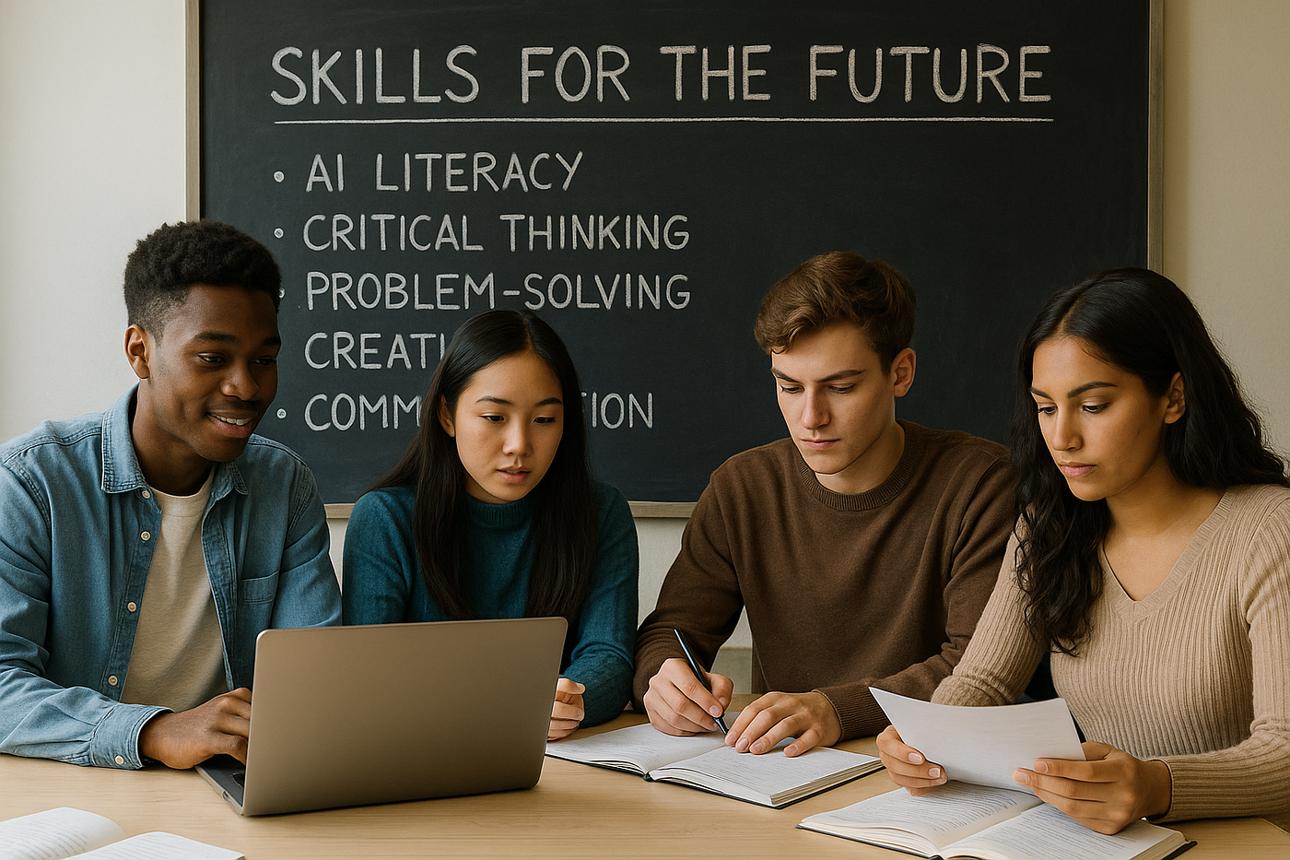
The Importance of Skill-Based Education for Future Careers


The Importance of Skill-Based Education for Future Careers 🎓💼
Education has traditionally focused heavily on academic knowledge, examinations, textbooks, and qualifications. While these elements remain important, the world of work is changing rapidly. Employers increasingly value people who can not only understand concepts but also apply their knowledge to solve problems, communicate effectively, use technology, collaborate with others, and adapt to changing circumstances.
This is where skill-based education becomes increasingly important.
Skill-based education focuses on developing practical abilities that students can apply in real-world situations. Instead of concentrating only on what students know, it also asks what they can actually do with that knowledge.
From digital literacy and communication to critical thinking, technical expertise, creativity, teamwork, and problem-solving, skills can help students prepare for employment and lifelong learning.
The future workplace is likely to continue evolving as technology, automation, artificial intelligence, globalization, and changing consumer needs reshape different industries. Students therefore need more than a certificate. They need the ability to learn, adapt, and apply their knowledge throughout their careers.
🎯 What Is Skill-Based Education?
Skill-based education is an approach that emphasizes practical competencies alongside theoretical knowledge.
Traditional education may ask students to remember information and demonstrate it through examinations. Skill-based education adds another dimension: students are given opportunities to practice and demonstrate how they can use what they have learned.
For example, a student studying computer science might not only learn programming concepts but also build an application.
A business student might learn marketing theories and then create a real marketing campaign.
An engineering student might study technical principles and then work on practical projects.
A communication student might learn presentation theory and then deliver presentations to an audience.
The objective is to connect knowledge with action.


💡 1. Connects Classroom Learning With Real Life
One major advantage of skill-based education is that it helps students understand how academic concepts are used outside the classroom.
Students often ask, “Where will I use this?”
Practical projects can provide an answer.
A mathematics student can apply mathematical concepts to budgeting, statistics, programming, engineering, or business.
A science student can conduct experiments and analyze real-world problems.
A language student can practice professional writing, public speaking, interviewing, and communication.
When students see the connection between education and practical applications, learning can become more meaningful.
💼 2. Improves Career Readiness
Employers generally need people who can perform tasks, solve problems, communicate with colleagues, and learn new processes.
A qualification can demonstrate that someone has completed a particular course of study, but practical skills can help demonstrate how effectively that knowledge can be applied.
Skill-based education can therefore help students become more prepared for internships, apprenticeships, entry-level positions, freelance work, and other career opportunities.
🛠️ Practical Experience Matters
Students can develop practical experience through:
- Internships
- Apprenticeships
- Laboratory work
- Workshops
- Projects
- Simulations
- Industry visits
- Volunteer activities
- School or college clubs
- Entrepreneurship projects
These experiences allow students to practice skills before entering full-time employment.
🧠 3. Develops Problem-Solving Skills
Modern careers often involve problems that do not have one obvious answer.
Employees may need to identify an issue, understand its causes, evaluate options, and develop a solution.
Skill-based education can develop this ability through project-based learning and real-world challenges.
For example, instead of simply learning about environmental pollution, students might be asked to identify a local environmental problem and propose realistic solutions.
Instead of memorizing business concepts, students might develop a plan for launching a small product.
These activities encourage students to think independently.
🗣️ 4. Strengthens Communication Skills
Technical knowledge alone is rarely enough for career success.
Professionals need to communicate with colleagues, customers, managers, clients, and other stakeholders.
Communication skills include:
- Speaking clearly
- Writing professionally
- Listening actively
- Presenting ideas
- Asking useful questions
- Explaining complex information
- Participating in discussions
- Communicating respectfully
Skill-based education can integrate communication into everyday assignments.
Students can present projects, participate in debates, write reports, conduct interviews, and work in teams.
These activities provide practical opportunities to develop confidence.
🤝 5. Builds Teamwork and Collaboration
Most modern workplaces require employees to work with other people.
Projects may involve designers, engineers, marketers, managers, analysts, technicians, and customers.
Students can develop teamwork skills through group assignments and collaborative projects.
They learn how to divide responsibilities, manage disagreements, communicate expectations, meet deadlines, and work toward a shared objective.
👥 Learning From Others
Working with classmates also exposes students to different perspectives.
A successful team does not require everyone to think in exactly the same way.
Instead, different viewpoints can help teams identify better solutions.
Learning to respect differences while maintaining a common goal is an important professional skill.
💻 6. Prepares Students for the Digital Workplace
Technology has become part of almost every industry.
Even careers that were once primarily manual or administrative increasingly involve digital tools.
Students may need skills in:
- Digital communication
- Spreadsheets
- Data analysis
- Online collaboration
- Cybersecurity awareness
- Digital research
- Presentation software
- Basic coding or automation
- Artificial intelligence tools
- Digital content creation
The exact skills required vary by career, but basic digital literacy is increasingly valuable.
🤖 Understanding Artificial Intelligence
Artificial intelligence is also changing how many professionals work.
Students do not necessarily need to become AI specialists, but understanding how AI tools work, their limitations, responsible use, and appropriate applications can be useful in many fields.
The ability to work alongside new technology may become an important career advantage.
🚀 7. Encourages Entrepreneurship
Skill-based education can also encourage students to create opportunities rather than only search for jobs.
Entrepreneurship education can teach students how to identify problems, understand customers, develop products, manage resources, communicate value, and evaluate risks.
Students might develop a small business idea as part of a classroom project.
They can learn from the process even if they never become entrepreneurs.
Entrepreneurial skills such as initiative, creativity, decision-making, adaptability, and persistence are valuable in traditional employment as well.


🌱 8. Develops Adaptability
One of the most important skills for the future may be the ability to adapt.
Industries change.
New technologies appear.
Job responsibilities evolve.
Some tasks become automated while new roles emerge.
Students who develop a habit of continuous learning may be better prepared for these changes.
Skill-based education can encourage adaptability by exposing students to unfamiliar tasks and requiring them to learn new tools.
Instead of asking students to master one fixed set of skills forever, education can teach them how to learn new skills.
📈 9. Supports Lifelong Learning
A person’s education does not end after graduation.
Professionals may need to learn new software, regulations, technologies, processes, and industry practices throughout their careers.
Skill-based education can establish a mindset of continuous improvement.
Students can learn to:
- Identify what they do not know.
- Find reliable learning resources.
- Practice new skills.
- Receive feedback.
- Correct mistakes.
- Apply new knowledge.
- Continue improving.
These habits can remain valuable for decades.
🧩 10. Helps Students Discover Their Strengths
Academic examinations do not always reveal every student’s abilities.
Some students may be excellent at practical problem-solving, leadership, design, communication, mechanical work, coding, organization, or creative thinking even if they do not achieve the highest examination scores.
Skill-based activities can provide students with opportunities to discover these strengths.
A student who struggles with traditional classroom learning may become highly engaged when given the opportunity to build something, solve a practical problem, create digital content, or work on a hands-on project.
This can improve confidence and help students make better career decisions.
🎯 11. Makes Career Guidance More Practical
Career decisions can be difficult when students know only the names of professions but do not understand what professionals actually do.
Skill-based education can expose students to different career activities.
A student interested in engineering can experience design and problem-solving projects.
Someone interested in healthcare can learn about relevant scientific and communication skills.
A student interested in business can practice marketing, budgeting, and entrepreneurship.
These experiences can help students make more informed decisions.
🏭 12. Strengthens Industry and Education Connections
Educational institutions can collaborate with employers and professional organizations to make learning more relevant.
Industry experts can participate in workshops, guest lectures, mentoring programs, competitions, and practical projects.
Companies can also offer internships and apprenticeships.
These partnerships can help educators understand changing workplace requirements while giving students opportunities to experience professional environments.
🌐 Learning Beyond the Classroom
Students can benefit from exposure to real workplaces.
They can observe professional behavior, workplace communication, project management, customer interaction, and industry standards.
This can make the transition from education to employment smoother.
🛠️ 13. Promotes Vocational and Technical Skills
Skill-based education should not be limited to office-based careers.
Vocational and technical skills are essential to modern economies.
Electricians, mechanics, technicians, construction professionals, healthcare assistants, laboratory technicians, culinary professionals, designers, machinists, and many other skilled workers perform important roles in society.
Vocational education can provide practical training that leads to meaningful career opportunities.
🔧 Respecting Different Career Paths
Society benefits when young people have multiple educational pathways.
University education is valuable, but it is not the only route to a successful career.
Technical training, apprenticeships, professional certifications, vocational education, entrepreneurship, and other pathways can also lead to rewarding careers.
The important question should be whether students develop useful skills and opportunities for continued growth.
💰 14. Can Improve Employability
Employability refers broadly to the knowledge, skills, attitudes, and abilities that help people enter and succeed in the workforce.
Skill-based education can strengthen employability by giving students practical evidence of what they can do.
For example, instead of simply stating that a student understands web development, a student can show a portfolio of websites or applications.
Instead of simply claiming strong communication skills, a student can demonstrate presentations, reports, or projects.
📁 Building a Portfolio
Students can create portfolios containing:
- Projects
- Research work
- Designs
- Code
- Presentations
- Certifications
- Writing samples
- Practical assignments
- Volunteer experiences
A portfolio can provide employers with evidence of applied skills.
🧠 15. Encourages Critical Thinking
Skill-based education can encourage students to question assumptions and evaluate information.
Critical thinking involves examining evidence, identifying weaknesses in arguments, comparing alternatives, and reaching reasoned conclusions.
These skills are valuable in almost every profession.
For example, employees may need to evaluate data before making decisions.
Managers may need to compare different strategies.
Researchers need to assess evidence.
Entrepreneurs need to evaluate customer needs.
Critical thinking therefore has broad career value.
🎨 16. Encourages Creativity and Innovation
Future careers will require people who can generate new ideas and find alternative solutions.
Creative thinking can be developed through projects that allow students to experiment.
Students can design products, create presentations, develop prototypes, write stories, produce videos, build software, or solve open-ended problems.
Not every creative idea will succeed.
That is part of the learning process.
Students can learn to test ideas, receive feedback, make changes, and try again.
📊 17. Teaches Practical Financial Skills
Financial literacy is another valuable life and career skill.
Students can learn about:
- Budgeting
- Saving
- Responsible borrowing
- Basic investment concepts
- Taxes
- Personal financial planning
- Business finances
Understanding money can help students make better decisions as employees, entrepreneurs, and consumers.
Schools can incorporate financial literacy into mathematics, economics, business, or dedicated life-skills programs.
🌍 18. Develops Global and Cultural Skills
Modern workplaces can be highly diverse.
Professionals may work with colleagues and customers from different regions, cultures, and backgrounds.
Students can develop cultural awareness and respectful communication through collaborative projects and exposure to different perspectives.
Global skills can help students communicate effectively across cultural differences.
🧑💼 19. Prepares Students for Interviews and Professional Life
Many students know their academic subjects but have limited experience with professional situations.
Skill-based education can include mock interviews, professional presentations, workplace simulations, resume development, email writing, teamwork exercises, and problem-solving scenarios.
These activities can help students become more comfortable with professional expectations.
🎤 Practicing Professional Communication
Students can learn how to introduce themselves, explain their skills, answer interview questions, communicate professionally, and respond to feedback.
These abilities can make the transition from education to employment less intimidating.
🔄 20. Makes Education More Relevant to the Future
The future of work is difficult to predict precisely.
Some jobs that exist today may change significantly, while new roles may emerge.
Because of this uncertainty, education should not focus only on training students for one narrowly defined job.
It should help students develop transferable skills.
These include:
- Communication
- Critical thinking
- Problem-solving
- Collaboration
- Digital literacy
- Adaptability
- Creativity
- Leadership
- Self-management
- Continuous learning
Transferable skills can remain valuable even when specific technologies or job titles change.
⚠️ Challenges in Implementing Skill-Based Education
Although skill-based education has many benefits, implementation can be challenging.
🏫 Limited Infrastructure
Some schools may lack laboratories, equipment, computers, or other resources needed for practical learning.
👩🏫 Teacher Training
Teachers may require professional development to design effective project-based and practical activities.
💰 Cost
Practical education can sometimes require additional investment.
📚 Balancing Theory and Practice
Practical skills should complement academic knowledge rather than replace it.
Students need both conceptual understanding and the ability to apply it.
📊 Assessment
Assessing practical skills can be more complex than grading traditional examinations.
Schools may need portfolios, demonstrations, projects, presentations, and performance-based assessments.
🏫 How Schools Can Promote Skill-Based Education
Schools and colleges can gradually integrate skill development into existing curricula.
1. Introduce Practical Projects
Give students opportunities to apply classroom concepts.
2. Offer Career-Oriented Courses
Provide relevant technical, vocational, digital, and professional skills.
3. Encourage Internships
Connect students with organizations where appropriate.
4. Develop Communication Activities
Use presentations, debates, group discussions, and writing exercises.
5. Build Digital Skills
Teach students to use technology responsibly and effectively.
6. Encourage Entrepreneurship
Allow students to develop and test business or social-enterprise ideas.
7. Create Portfolios
Encourage students to document their projects and achievements.
8. Partner With Industry
Invite professionals to provide mentorship and practical exposure.
🎓 The Role of Teachers in Skill-Based Education
Teachers remain central to successful skill development.
A teacher can transform theoretical knowledge into practical learning experiences.
Instead of simply explaining a concept, the teacher can ask students to apply it.
For example, after teaching statistics, students might analyze a real dataset.
After teaching communication, they might conduct interviews.
After teaching environmental science, they might investigate a local environmental issue.
The teacher becomes a facilitator who helps students connect knowledge with action.
👨👩👧 The Role of Parents and Families
Families can also support skill development.
Parents can encourage children to participate in hobbies, sports, creative activities, technology projects, volunteering, household responsibilities, and practical problem-solving.
Not every useful skill comes from a classroom.
Cooking, budgeting, communication, organization, teamwork, time management, and responsibility can also be learned through everyday experiences.
🚀 The Future of Skill-Based Education
As technology continues to change the workplace, skill-based education is likely to become increasingly important.
Artificial intelligence and automation may change how certain tasks are performed, but human capabilities such as creativity, communication, judgment, empathy, leadership, and complex problem-solving will continue to matter.
At the same time, technical skills will evolve.
Students therefore need an educational foundation that prepares them to continuously update their abilities.
The future belongs not necessarily to people who know everything today, but to people who can learn, adapt, and apply knowledge effectively.
🌟 Conclusion
Skill-based education is an important part of preparing students for future careers.
Academic knowledge provides a foundation, but practical skills help students apply that knowledge in real-world situations.
🎓 Knowledge tells students what something is.
🛠️ Skills help them understand how to use it.
💼 Career readiness helps them apply it professionally.
Skill-based education can strengthen problem-solving, communication, teamwork, digital literacy, creativity, adaptability, entrepreneurship, and practical technical abilities.
It can also help students discover their strengths, build confidence, develop portfolios, explore career options, and become lifelong learners.
The goal of education should not be simply to produce students who can pass examinations. It should help produce capable individuals who can think critically, solve problems, communicate effectively, work with others, learn continuously, and contribute meaningfully to society.
As the world of work continues to evolve, combining academic knowledge with practical skills can give students a stronger foundation for navigating an uncertain but exciting future. 🌍🚀
The careers of tomorrow may look different from the careers of today—but students who know how to learn, adapt, and apply their skills will be better prepared for whatever comes next. 🎓💼✨


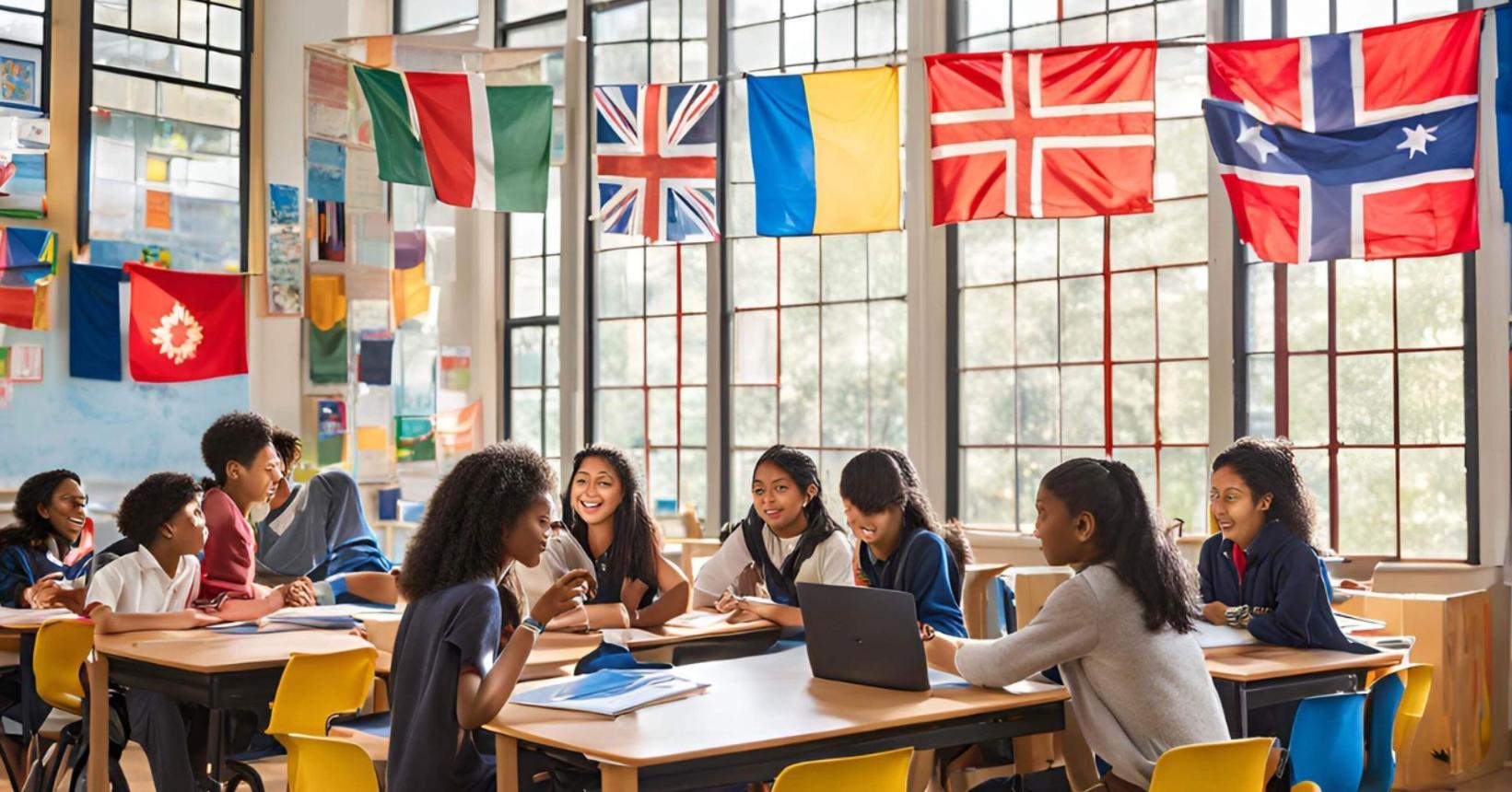
🎓 Future Skills Students Need to Succeed in the Modern World
The world of education and work is changing rapidly. Technology, artificial intelligence, automation, globalization, and evolving industries are creating new opportunities while changing the skills people need to succeed.
Academic knowledge remains important, but students also need practical abilities that help them adapt, communicate, solve problems, work with others, and continue learning throughout their lives.
The most successful students of the future may not simply be those who memorize the most information. They will be those who can learn, adapt, think critically, use technology responsibly, and apply their knowledge to real-world problems.


🧠 1. Critical Thinking and Problem-Solving
Critical thinking is one of the most valuable skills students can develop.
The modern world provides enormous amounts of information, but not all information is accurate or useful. Students need to learn how to evaluate evidence, identify unreliable claims, compare perspectives, and reach logical conclusions.
Problem-solving goes a step further. Instead of simply identifying a problem, students should learn how to:
- 🔎 Understand the problem
- 🧠 Analyze possible causes
- 💡 Generate solutions
- ⚖️ Compare different approaches
- 🛠️ Test solutions
- 🔄 Learn from mistakes
These skills are useful in almost every career and everyday situation.
💻 2. Digital Literacy
Digital technology is now part of education, communication, business, healthcare, entertainment, and everyday life.
Students should therefore understand how to use digital tools effectively and responsibly.
Digital literacy includes:
- Using productivity software
- Conducting online research
- Managing digital information
- Understanding basic cybersecurity
- Communicating online professionally
- Recognizing misinformation
- Protecting personal information
Being digitally literate does not simply mean knowing how to use a smartphone. It means understanding how technology works and how to use it effectively.
🤖 3. Artificial Intelligence Literacy
Artificial intelligence is becoming increasingly relevant across industries. Students don’t necessarily need to become AI engineers, but understanding the fundamentals of AI can be valuable.
Students should learn how to:
- Understand basic AI concepts
- Use AI tools responsibly
- Verify AI-generated information
- Recognize limitations and errors
- Protect sensitive information
- Use AI to support—not replace—independent thinking
The ability to work alongside AI may become an important part of many future careers.


🗣️ 4. Communication Skills
Strong communication can make a significant difference in education, employment, and relationships.
Students should develop the ability to express ideas clearly through:
Speaking: Presenting information confidently.
Writing: Communicating ideas in clear and organized language.
Listening: Understanding what others are saying.
Visual communication: Using presentations, charts, and other visual tools effectively.
Good communication isn’t about using complicated vocabulary. It is about making your message understandable and appropriate for the audience.
🤝 5. Collaboration and Teamwork
Many modern problems require people to work together.
Students may eventually work with colleagues from different backgrounds, locations, and areas of expertise. Learning how to collaborate prepares them for these environments.
Teamwork involves:
- Respecting different opinions
- Sharing responsibilities
- Listening to others
- Managing disagreements
- Giving constructive feedback
- Working toward shared goals
Group projects, sports, clubs, volunteering, and community activities can all help students develop these abilities.
🎨 6. Creativity and Innovation
Automation can handle many repetitive tasks, but creativity remains a uniquely valuable human capability.
Creativity is not limited to artists. Engineers, scientists, entrepreneurs, teachers, designers, healthcare professionals, and business leaders all need creative thinking.
Students can develop creativity by:
- Asking unusual questions
- Exploring different solutions
- Experimenting
- Creating projects
- Learning music or art
- Writing stories
- Designing products
- Solving problems in new ways
Encouraging students to experiment—and sometimes fail—can help them become more innovative thinkers.
📚 7. Lifelong Learning
Perhaps one of the most important future skills is the ability to keep learning.
Industries change. New technologies appear. Some jobs evolve while new professions emerge.
Students therefore need to understand that education doesn’t end with graduation.
A lifelong learner can:
Learn → Apply → Receive feedback → Improve → Learn again
Developing curiosity and independent study habits can help people adapt throughout their careers.
🧘 8. Emotional Intelligence
Technical knowledge is valuable, but understanding emotions and relationships is equally important.
Emotional intelligence includes:
- Recognizing your emotions
- Managing reactions
- Understanding other people’s feelings
- Showing empathy
- Building healthy relationships
- Handling disagreements constructively
These abilities can improve teamwork, leadership, communication, and decision-making.
🧑💼 9. Leadership Skills
Leadership isn’t only about becoming a manager or company executive. Students can demonstrate leadership in classrooms, clubs, sports teams, community organizations, and group projects.
Good leadership involves:
- Taking responsibility
- Making thoughtful decisions
- Supporting others
- Communicating clearly
- Accepting feedback
- Solving problems
- Setting a positive example
Students should learn that leadership is as much about serving and supporting others as it is about directing them.
🌍 10. Cultural Awareness and Global Thinking
Modern communication and technology connect people across countries and cultures.
Students may work with people who speak different languages, have different traditions, or approach problems differently.
Cultural awareness helps students:
- Respect differences
- Avoid stereotypes
- Communicate across cultures
- Understand global issues
- Collaborate internationally
Learning about other cultures can expand perspectives and encourage greater empathy.


💰 11. Financial Literacy
Understanding money is another practical skill students need.
Financial literacy can help young people understand:
- Budgeting
- Saving
- Banking
- Interest
- Credit
- Investing basics
- Taxes
- Responsible spending
- Financial risks
Students don’t need to become financial experts at school, but basic financial knowledge can help them make better decisions as adults.
🔐 12. Cybersecurity and Online Safety
As more activities move online, students need to understand how to protect themselves digitally.
Important habits include:
- Using strong, unique passwords
- Enabling multi-factor authentication
- Recognizing phishing attempts
- Avoiding suspicious downloads
- Protecting personal information
- Checking website legitimacy
- Understanding privacy settings
Digital safety should become as normal as physical safety.
🧩 13. Adaptability and Resilience
Change is unavoidable. Students may eventually experience new technologies, changing industries, unexpected challenges, and career transitions.
Adaptability means being willing to learn new approaches.
Resilience means being able to recover from setbacks and continue moving forward.
Students can develop resilience by learning to view mistakes as opportunities for improvement rather than proof of failure.
Instead of asking:
“Why did I fail?”
They can learn to ask:
“What can I learn from this experience?”
📊 14. Data and Information Literacy
Modern society produces enormous amounts of data. Students should understand how to interpret information rather than simply consume it.
Basic data literacy includes:
- Reading charts and graphs
- Understanding percentages
- Comparing statistics
- Identifying misleading presentations
- Understanding basic probability
- Checking sources
This skill can help students make better decisions in education, work, finance, and everyday life.
🏫 How Schools Can Prepare Students
Schools can help students develop future skills by moving beyond purely lecture-based learning.
Useful approaches include:
🧪 Project-Based Learning
Students work on real-world problems and develop solutions.
🎤 Presentations and Debates
Students practice communication, research, and confidence.
💻 Technology Projects
Students learn digital tools through practical applications.
🤝 Team Activities
Group projects develop collaboration and leadership.
💡 Entrepreneurship Programs
Students learn about innovation, business, financial literacy, and problem-solving.
🌱 Community Projects
Volunteering and service learning can develop responsibility and social awareness.
👨👩👧 The Role of Parents and Families
Future skills don’t have to be developed exclusively at school.
Parents and families can encourage children to:
- Read regularly
- Ask questions
- Solve problems independently
- Help with household responsibilities
- Manage time
- Practice communication
- Explore hobbies
- Use technology responsibly
- Learn from mistakes
Creating an environment where curiosity is encouraged can have a lasting impact.
🚀 Building a Future-Ready Student
A future-ready student isn’t someone who knows everything.
It is someone who knows how to learn.
A strong combination might look like:
📚 Knowledge + 🧠 Critical Thinking + 💻 Technology + 🤝 Collaboration + 🎨 Creativity + 🗣️ Communication + 🧘 Emotional Intelligence + 🔄 Adaptability
Together, these skills can help students navigate an increasingly complex world.
🌟 Conclusion
The future will require more than academic qualifications. Students need a broad combination of technical, cognitive, social, and personal skills to succeed in a rapidly changing world.
Critical thinking, digital and AI literacy, communication, creativity, teamwork, emotional intelligence, financial awareness, adaptability, and lifelong learning can help young people prepare for opportunities and challenges that may not yet be fully predictable.
Education should therefore focus not only on what students know, but also on how they think, how they learn, how they work with others, and how they respond to change.
The best preparation for the future is not trying to predict exactly what will happen—it is helping students develop the skills to adapt when it does. 🎓💡🌍
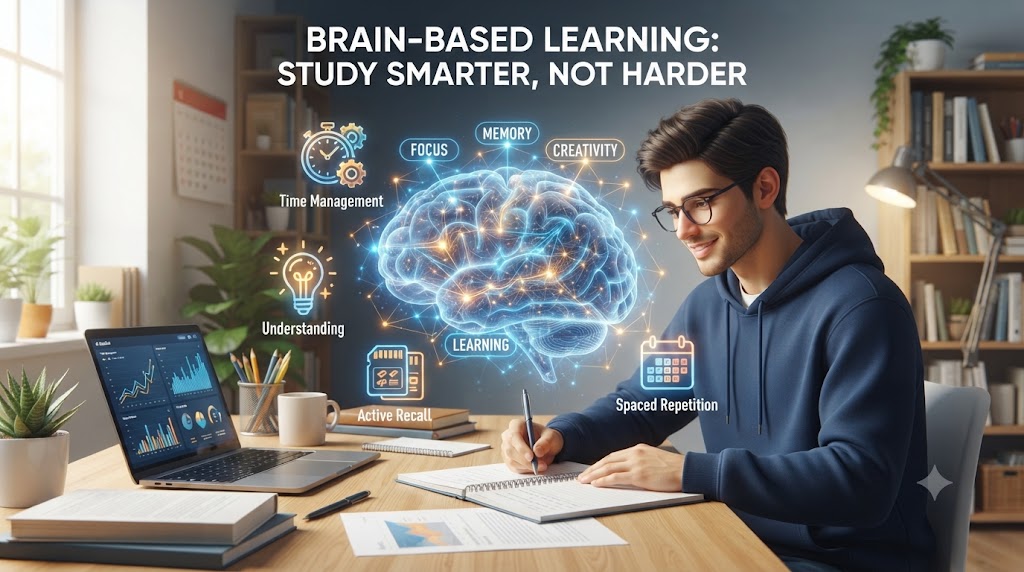
🧠 Brain-Based Learning: How to Study Smarter, Not Harder
Introduction: Understanding How Your Brain Learns
Studying for hours does not always guarantee success. Many students spend countless hours reading textbooks, highlighting notes, and repeating information, yet struggle to remember what they studied. The reason is simple: effective learning depends on how the brain processes, stores, and retrieves information.
Brain-based learning uses knowledge from neuroscience and psychology to create study methods that match the natural working style of the brain. Instead of forcing yourself to study harder, you learn how to study smarter by improving focus, memory, understanding, and long-term retention.
genui{“biology_neuroscience_behavior_senses_learning_block”:{“type_id”:”SYNAPTIC_TRANSMISSION”,”locale_override”:”en-US”}}
🧠 How Your Brain Stores Information
The human brain is designed to learn through connections. Every time you learn something new, your brain creates and strengthens pathways between neurons. The stronger these connections become, the easier it is to recall information later.
Learning happens through three major processes:
1. Encoding: Taking In New Information
Encoding is the first step of learning. Your brain receives information through reading, listening, watching, or practicing. However, simply seeing information does not mean your brain has learned it.
To improve encoding:
- Connect new information with things you already know
- Use examples and real-life situations
- Ask questions while studying
- Explain concepts in your own words
2. Consolidation: Making Knowledge Permanent
After learning, your brain needs time to organize and store information. Sleep plays a major role in this process.
During sleep, the brain strengthens important memories and removes unnecessary information. A tired brain may study for hours but remember very little.
Better habits:
- Sleep 7–9 hours regularly
- Review material before sleeping
- Avoid all-night study sessions
3. Retrieval: Bringing Information Back
The strongest learners do not only read information repeatedly. They practice recalling it.
Examples:
- Taking practice tests
- Answering questions without looking at notes
- Teaching someone else
- Writing summaries from memory
Retrieval practice trains your brain to access information quickly during exams.
📚 Study Smarter With These Brain-Based Techniques
1. Use Active Recall Instead of Passive Reading
Many students read the same chapter again and again thinking they are learning. However, passive reading creates a false feeling of familiarity.
Active recall forces your brain to retrieve information.
Try this method:
Instead of reading:
❌ “I read the chapter five times.”
Do this:
✅ “I close the book and explain what I remember.”
Examples:
- Create flashcards
- Solve questions
- Write key points from memory
- Teach the topic to someone
Active recall strengthens memory pathways.
⏳ 2. Apply the Spaced Repetition Method
The brain forgets information when it is not reviewed. Spaced repetition prevents forgetting by reviewing information at increasing intervals.
Example schedule:
📅 Day 1: Learn the topic
📅 Day 3: Quick review
📅 Day 7: Practice again
📅 Day 14: Review important points
📅 Day 30: Final revision
This method helps move information from short-term memory into long-term memory.
🎯 3. Study in Focused Sessions
The brain cannot maintain maximum concentration for many hours continuously.
Instead of studying for 6 hours without breaks, use focused study cycles.
The Pomodoro Technique:
🍅 Study for 25–50 minutes
☕ Take a 5–10 minute break
🔁 Repeat the cycle
During breaks:
- Stretch
- Drink water
- Walk around
- Avoid excessive phone scrolling
Short breaks refresh your brain and improve concentration.
🌱 4. Understand Before Memorizing
The brain remembers meaningful information better than random facts.
For example:
Instead of memorizing:
“Photosynthesis occurs in chloroplasts.”
Understand:
“Plants use chloroplasts like tiny food factories that convert sunlight into energy.”
When information has meaning, your brain creates stronger connections.
✍️ 5. Use the Feynman Technique
The Feynman Technique is one of the best ways to check your understanding.
Follow these steps:
Step 1: Choose a topic
Pick something you want to learn.
Step 2: Explain it simply
Pretend you are teaching a child.
Step 3: Find gaps
Notice what parts you cannot explain.
Step 4: Improve your understanding
Study those weak areas and explain again.
If you can teach it simply, you truly understand it.
🧩 6. Combine Different Learning Methods
The brain learns better when multiple senses are involved.
Try combining:
👀 Visual learning:
- Diagrams
- Mind maps
- Charts
👂 Auditory learning:
- Explaining aloud
- Discussions
- Educational videos
✍️ Writing:
- Notes
- Summaries
- Practice answers
🖐 Practical learning:
- Experiments
- Real-life applications
Multiple learning pathways create stronger memories.
🧘 7. Train Your Brain for Better Focus
Modern distractions make concentration difficult. A distracted brain cannot learn efficiently.
Improve focus by:
📱 Keeping your phone away while studying
🎧 Studying in a quiet environment
📝 Creating daily goals
🌿 Practicing mindfulness or meditation
🎯 Studying one topic at a time
Deep focus creates deeper learning.
🥗 8. Feed Your Brain Properly
Your brain requires energy to learn effectively.
Brain-friendly foods include:
🥜 Nuts and seeds
🐟 Omega-3-rich foods
🍎 Fruits
🥦 Vegetables
🥚 Eggs
💧 Plenty of water
Avoid excessive junk food and dehydration because they can reduce concentration.
😴 9. Never Underestimate Sleep
Sleep is not wasted study time. It is when your brain organizes learning.
Benefits of good sleep:
✅ Better memory
✅ Improved problem-solving
✅ Increased attention
✅ Better emotional control
Studying late at night while sacrificing sleep often reduces performance.
🏃 10. Exercise for a Smarter Brain
Physical activity improves blood flow to the brain and supports mental performance.
Simple activities:
🚶 Walking
🧘 Yoga
🏃 Light exercise
🏸 Sports
Even 20–30 minutes of movement can improve mood and concentration.
📖 Example of a Brain-Based Study Routine
Morning (High Energy)
🌅 Review difficult concepts
📚 Learn new topics
✍ Practice active recall
Afternoon
📝 Solve questions
🔄 Review previous lessons
Evening
📖 Light revision
🧠 Create summaries
😴 Prepare for quality sleep
Common Study Mistakes That Waste Brain Power
❌ Studying Without Breaks
Long sessions reduce attention and increase fatigue.
❌ Memorizing Without Understanding
Information without meaning disappears quickly.
❌ Multitasking
Switching between tasks reduces learning efficiency.
❌ Ignoring Revision
Without repetition, memories weaken.
❌ Studying Only Before Exams
Last-minute learning creates stress and poor retention.
🧠 The Science of Becoming a Better Learner
Being a successful student is not about having a “perfect memory.” It is about using strategies that work with your brain.
The best learners:
✔ Ask questions
✔ Practice regularly
✔ Review strategically
✔ Understand concepts deeply
✔ Take care of their health
Your brain has the ability to change and adapt through a process called neuroplasticity. Every time you practice, learn, and challenge yourself, your brain becomes better at learning.
Conclusion: Study Smarter, Grow Faster
Brain-based learning teaches us that studying is not about spending more hours with books. It is about using effective methods that help your brain absorb and remember information.
By using active recall, spaced repetition, proper sleep, focused study sessions, exercise, and meaningful learning techniques, you can improve your academic performance while reducing stress.
Remember: A smarter study method can achieve more than endless hours of ineffective studying. Train your brain, understand your learning style, and make every study session count.
Online Learning vs Traditional Classroom Education: Which Is Better?
Education has always evolved with society, technology, and human needs. For centuries, traditional classroom education has been the primary method of learning, where students gather in schools and universities to interact with teachers and classmates. However, the rapid growth of the internet, artificial intelligence, and digital platforms has introduced a new approach: online learning.
Online education has transformed how students access knowledge. From virtual classrooms and recorded lectures to interactive learning platforms and AI-powered tutoring tools, digital education provides opportunities for learners worldwide. At the same time, traditional classrooms continue to offer valuable face-to-face interaction, discipline, and social experiences.
The debate between online learning vs traditional classroom education is not simply about choosing one over the other. Each method has unique strengths and limitations. The best choice depends on students’ learning styles, goals, resources, and personal circumstances.
Understanding Online Learning 💻
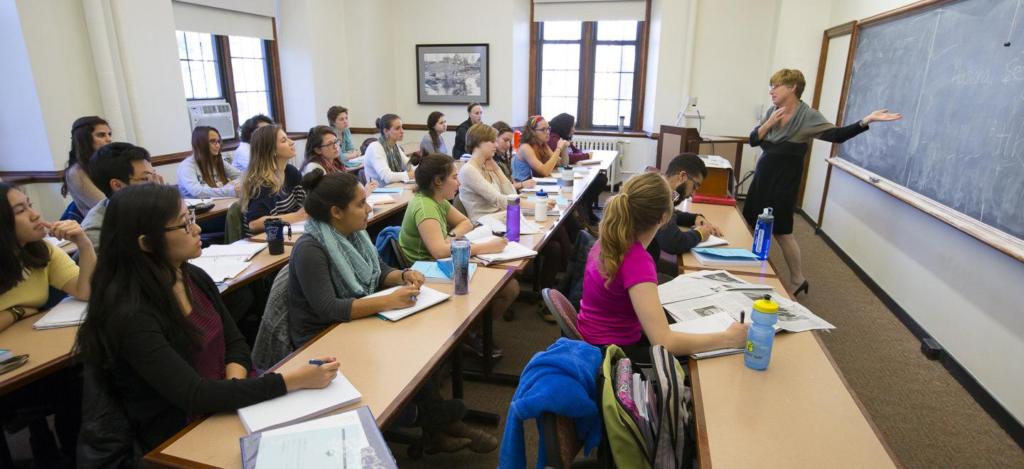
Online learning, also known as digital education or e-learning, is a method of education where students use internet-based platforms to attend classes, access study materials, complete assignments, and communicate with instructors.
Students can learn through:
- Video lectures 🎥
- Online courses
- Virtual classrooms
- Educational apps
- Digital textbooks
- Discussion forums
- AI learning assistants
Online learning became especially popular during the COVID-19 pandemic, when schools and universities worldwide shifted to virtual classrooms. Since then, many institutions have continued using online tools because of their flexibility and accessibility.
Advantages of Online Learning 🌐
1. Flexibility and Convenience ⏰
One of the biggest benefits of online education is flexibility. Students can study from anywhere and often choose when they want to learn.
A student can attend classes:
- From home
- While working part-time
- During travel
- According to their own schedule
This makes online learning especially useful for working professionals, parents, and students who cannot attend traditional classes regularly.
For example, a student can watch a recorded lecture at night instead of missing important lessons because of daytime responsibilities.
2. Access to Global Education 🌍
Online learning removes geographical barriers. Students are no longer limited to institutions available in their local areas.
Through digital platforms, learners can access:
- International courses
- Expert instructors
- Specialized subjects
- Global learning communities
A student living in a rural area can learn from professors and experts located thousands of kilometers away.
3. Cost-Effective Learning 💰
Online education can often be more affordable than traditional education.
Students may save money on:
- Transportation costs
- Accommodation expenses
- Printed textbooks
- Campus fees
Many online courses also provide free or low-cost learning resources, making education more accessible to a wider audience.
4. Personalized Learning Experience 🤖
Modern digital platforms use artificial intelligence and data analysis to create personalized learning experiences.
AI-powered systems can:
- Recommend study materials
- Track student progress
- Identify weak areas
- Provide customized practice questions
This allows students to learn at their own speed instead of following a fixed classroom pace.
5. Development of Digital Skills 💡
Online learning naturally improves technology skills. Students become familiar with:
- Digital communication
- Online research
- Virtual collaboration tools
- Technology-based problem solving
These skills are increasingly important in modern workplaces.
Challenges of Online Learning ⚠️
1. Lack of Face-to-Face Interaction
One major disadvantage of online education is limited physical interaction.
Traditional classrooms allow students to:
- Ask questions immediately
- Participate in discussions
- Build friendships
- Develop communication skills
Some students may feel isolated when learning alone behind a screen.
2. Requires Strong Self-Discipline
Online learning requires motivation and time management.
Without a fixed classroom schedule, some students may struggle with:
- Procrastination
- Poor concentration
- Missing deadlines
- Lack of regular study habits
Students must take greater responsibility for organizing their own learning.
3. Technology Problems 💻
Digital education depends heavily on technology.
Common problems include:
- Poor internet connection
- Lack of devices
- Software issues
- Technical difficulties
Students without reliable internet access may face difficulties participating equally.
4. Limited Practical Learning Opportunities
Some subjects require hands-on experience, such as:
- Laboratory sciences
- Medical training
- Engineering workshops
- Practical arts
Online learning may not fully replace physical practice and real-world experiences.
Understanding Traditional Classroom Education 🏫
Traditional classroom education is the conventional method where students and teachers meet physically in schools, colleges, or universities.
It involves:
- Direct teaching
- Classroom discussions
- Group activities
- Practical sessions
- Face-to-face interaction
Despite technological changes, traditional education remains an important part of the global education system.
Advantages of Traditional Classroom Education 📚
1. Direct Teacher Interaction 👩🏫
A major strength of classroom learning is immediate communication between students and teachers.
Teachers can:
- Explain difficult concepts
- Observe student understanding
- Provide instant feedback
- Adjust teaching methods
Personal interaction often creates stronger learning connections.
2. Better Social Development 🤝
Schools and universities are not only places for academic learning but also environments for social growth.
Students develop:
- Communication skills
- Teamwork
- Leadership abilities
- Friendships
- Confidence
Group projects and classroom discussions teach valuable interpersonal skills.
3. Structured Learning Environment 📅
Traditional classrooms provide a fixed routine.
Students benefit from:
- Regular schedules
- Teacher supervision
- Organized lessons
- Academic discipline
This structure helps many students stay focused and motivated.
4. Practical and Hands-On Learning 🔬
Many subjects require physical participation.
Classrooms provide opportunities for:
- Science experiments
- Laboratory work
- Sports activities
- Workshops
- Field training
These experiences are difficult to fully recreate online.
5. Stronger Student Engagement
Physical classrooms encourage active participation through:
- Debates
- Group discussions
- Presentations
- Classroom activities
Students often feel more connected and involved.
Challenges of Traditional Classroom Education ⚠️
1. Limited Flexibility
Traditional education follows fixed schedules.
Students must attend classes at specific times and locations, which may be difficult for:
- Working students
- Distance learners
- People with family responsibilities
2. Higher Costs
Traditional education can involve significant expenses, including:
- Transportation
- Housing
- Campus fees
- Physical learning materials
For some learners, these costs create barriers.
3. One-Size-Fits-All Approach
In a classroom with many students, teachers usually follow a common teaching method.
However, students have different:
- Learning speeds
- Interests
- Strengths
- Weaknesses
Some students may need additional support that a traditional classroom cannot always provide.
4. Geographical Limitations
Students can only attend institutions available in their area unless they relocate.
This limits access to specialized courses and expert teachers.
Online Learning vs Traditional Classroom: A Comparison Table 📊
| Feature | Online Learning | Traditional Classroom |
|---|---|---|
| Location | Anywhere with internet | Fixed classroom |
| Flexibility | Very high | Limited |
| Teacher Interaction | Mostly virtual | Face-to-face |
| Cost | Usually lower | Usually higher |
| Social Interaction | Limited | Strong |
| Learning Speed | Self-paced | Fixed pace |
| Technology Requirement | High | Moderate |
| Practical Training | Limited | Better |
| Accessibility | Global | Local |
Which Is Better: Online Learning or Traditional Education? 🤔
There is no universal answer because both methods serve different purposes.
Online learning may be better for students who:
✅ Need flexibility
✅ Prefer independent study
✅ Want affordable education
✅ Have strong self-discipline
✅ Need access to global courses
Traditional classroom education may be better for students who:
✅ Prefer personal guidance
✅ Learn better through interaction
✅ Need structured schedules
✅ Want campus experiences
✅ Require practical training
The Future: Blended Learning Is the Best Solution 🚀
The future of education is likely to combine both approaches through blended learning.
Blended learning combines:
- Classroom teaching
- Online resources
- Digital tools
- Interactive activities
For example, students may attend physical classes while also using online platforms for assignments, recorded lectures, and additional practice.
This approach provides the benefits of both systems:
- Personal teacher support
- Flexible learning options
- Technology-based resources
- Better student engagement
Conclusion 🎯
Online learning and traditional classroom education both have important advantages and challenges. Digital education provides flexibility, affordability, and global access, while traditional classrooms offer personal interaction, social development, and practical experiences.
Rather than replacing traditional education completely, online learning is expanding educational possibilities. The most effective education system of the future will likely combine technology with human connection.
Ultimately, the best learning method depends on the student’s needs, learning style, goals, and available resources. Whether online or offline, the true purpose of education remains the same: helping individuals gain knowledge, develop skills, and prepare for a successful future. 🌟
Why Continuous Learning Is the Secret to Long-Term Career Success 🚀
How Upskilling, Certifications, Online Courses, and Lifelong Learning Habits Build a Future-Proof Career


Introduction: The Career Advantage of Never Stopping Learning 📚
The world of work is changing faster than ever. New technologies, evolving industries, artificial intelligence, automation, and changing business needs are transforming the skills required to succeed. A skill that is highly valuable today may become outdated within a few years.
In this environment, continuous learning is no longer just an option—it has become a career necessity. Professionals who consistently improve their knowledge and abilities are better prepared for new opportunities, promotions, leadership roles, and career transitions.
Successful careers are not built only through degrees or initial qualifications. They are built through curiosity, adaptability, and the willingness to learn throughout life. Whether through certifications, online courses, workshops, professional networks, or self-study, continuous learning helps individuals remain competitive in an unpredictable job market.
1. The Changing World of Work Requires Continuous Learning 🌎
For decades, many people followed a traditional career path: complete education, secure a job, gain experience, and retire. However, modern careers look very different.
Industries are constantly evolving because of:
- Artificial intelligence and automation 🤖
- Digital transformation
- Global competition
- New business models
- Changing customer expectations
- Emerging technologies
A professional who stops learning may find their skills becoming less relevant. On the other hand, those who regularly upgrade themselves can adapt quickly to change.
For example:
- A marketer today needs knowledge of digital marketing, analytics, and AI tools.
- A finance professional benefits from learning data analysis and automation.
- A teacher must understand digital education platforms.
- A software developer must continuously learn new programming languages and technologies.
The ability to learn has become one of the most valuable career skills.
2. Upskilling: Building Skills for Future Opportunities 🔥
Upskilling means improving existing skills or learning new abilities that increase professional value. It helps employees perform better in their current roles while preparing them for future responsibilities.
Why Upskilling Matters
1. Better Career Growth 📈
Employees with updated skills often have more opportunities for:
- Promotions
- Salary increases
- Leadership positions
- Advanced responsibilities
Organizations prefer professionals who can solve modern problems and contribute beyond their basic job requirements.
2. Greater Job Security 🛡️
Technology may replace certain tasks, but professionals who continuously develop new skills can adapt to changing environments.
For example, instead of fearing automation, employees can learn how to use AI tools to improve productivity.
3. More Career Flexibility
Upskilling allows people to explore new career paths.
A person with a background in mathematics can learn:
- Data analytics
- Artificial intelligence
- Financial modeling
- Programming
A communication professional can develop skills in:
- Content strategy
- Digital marketing
- Public relations
- Brand management
Learning creates more career possibilities.
3. Certifications: Proof of Professional Growth 🏆
Certifications provide structured learning and demonstrate expertise in specific areas. They can strengthen resumes and help professionals stand out in competitive job markets.
Unlike traditional degrees, certifications are often focused on practical skills and industry requirements.
Benefits of Professional Certifications
Demonstrates Expertise
A certification shows employers that an individual has invested time and effort into mastering a subject.
Examples include:
- Technology certifications
- Project management certifications
- Finance certifications
- Digital marketing certifications
- Language certifications
Improves Career Opportunities
Many employers value candidates who combine experience with recognized certifications.
For example:
A project manager with a professional certification may have an advantage when applying for leadership roles.
A cybersecurity professional with security certifications may attract more opportunities in the technology sector.
Encourages Structured Learning
Certifications provide:
- Clear goals
- Learning resources
- Exams or assessments
- Industry-recognized validation
They help learners maintain discipline and consistency.
4. Online Courses: Learning Without Limits 💻
One of the biggest advantages of modern technology is access to affordable and flexible education.
Online learning platforms have transformed how people develop skills. Professionals can now learn from experts around the world without leaving their homes.
Advantages of Online Courses
Flexible Learning Schedule ⏰
Many professionals balance jobs, family responsibilities, and personal goals. Online courses allow learners to study according to their own schedules.
A person can learn:
- During weekends
- After work hours
- Through short daily lessons
Wide Range of Topics
Online education provides opportunities to learn almost anything:
- Artificial intelligence
- Business management
- Communication skills
- Coding
- Design
- Leadership
- Entrepreneurship
Practical Skill Development
Many online courses include:
- Projects
- Case studies
- Real-world examples
- Assignments
This helps learners apply knowledge directly in their careers.
5. Lifelong Learning Habits That Create Career Success 🌱
Continuous learning is not only about taking courses. It is a mindset and daily habit.
Successful professionals develop routines that keep their knowledge growing.
1. Read Regularly 📖
Reading industry news, books, research articles, and professional blogs keeps individuals informed about changes in their fields.
Even 20–30 minutes of reading daily can create significant improvement over time.
2. Learn From Experts
Following industry leaders, attending webinars, and joining professional communities can provide valuable insights.
Learning from experienced people helps professionals understand trends and avoid common mistakes.
3. Practice New Skills
Knowledge becomes valuable when applied.
Instead of only watching tutorials:
- Build projects
- Solve problems
- Experiment with tools
- Take practical challenges
Action turns learning into expertise.
4. Reflect on Progress
Successful learners regularly ask:
- What skills have I improved?
- What skills does my industry need?
- What should I learn next?
Self-assessment helps maintain career direction.
6. The Role of Artificial Intelligence in Continuous Learning 🤖
Artificial intelligence is changing how people learn and develop professionally.
AI-powered tools can help individuals:
- Personalize learning paths
- Explain difficult concepts
- Provide instant feedback
- Generate practice exercises
- Recommend useful resources
Professionals who learn to work alongside AI will have a significant advantage in future workplaces.
The goal is not simply to compete with technology but to use technology as a learning partner.
7. Continuous Learning and Career Adaptability 🔄
Career success is no longer about having one skill forever. It is about the ability to adapt.
Many successful professionals have changed careers multiple times because they continuously learned new abilities.
Examples:
- Engineers becoming technology managers
- Teachers becoming education entrepreneurs
- Designers moving into product leadership
- Employees becoming business owners
Learning creates confidence to handle change.
When people develop a growth mindset, challenges become opportunities for improvement.
8. How Companies Benefit From Learning Employees 🏢
Continuous learning is not only beneficial for individuals. Organizations also gain significant advantages.
Companies with learning-focused employees experience:
- Higher innovation
- Better problem-solving
- Increased productivity
- Stronger employee engagement
- Improved competitiveness
Many modern companies invest in:
- Training programs
- Skill development workshops
- Learning platforms
- Leadership programs
They understand that employee growth drives business growth.
9. Creating Your Personal Learning Strategy 🎯
A successful learning plan should be realistic and consistent.
Step 1: Identify Career Goals
Ask yourself:
- Where do I want my career to be in five years?
- Which skills are required for that goal?
Step 2: Find Skill Gaps
Compare your current abilities with industry expectations.
Identify areas where improvement is needed.
Step 3: Choose Learning Resources
Select:
- Online courses
- Books
- Certifications
- Mentorship programs
- Workshops
Step 4: Set Learning Targets
Create measurable goals:
Example:
- Complete one certification in six months
- Read one professional book every month
- Spend five hours weekly learning a new skill
Step 5: Apply Knowledge
Use your new skills in real projects and workplace situations.
Conclusion: Learning Is the Foundation of Future Career Success 🌟
Continuous learning is the secret advantage that separates successful professionals from those who struggle to keep up with change. In a world where industries, technologies, and job requirements constantly evolve, the ability to learn and adapt has become one of the most valuable career assets.
Upskilling, certifications, online courses, and lifelong learning habits help professionals remain competitive, discover new opportunities, and build confidence for the future.
The most successful careers are not built by people who know everything—they are built by people who never stop learning. By making learning a daily habit, anyone can create a stronger, more flexible, and future-ready career. 🚀
🎓 Study Abroad in 2026: New Visa Rules, Scholarships, and Top Destinations
Studying abroad remains one of the best ways to gain a world-class education, international work experience, and global career opportunities. However, 2026 has brought significant changes to student visa policies, scholarship opportunities, and preferred destinations. Students planning to pursue undergraduate, postgraduate, or research programs abroad should stay informed to avoid unexpected challenges.
This guide covers the latest visa updates, popular scholarships, and the best countries for international students in 2026.
🌍 Why Study Abroad in 2026?
Despite changing immigration policies, international education continues to offer numerous advantages:
- Globally recognized degrees
- Better research facilities
- International career opportunities
- Cultural exposure
- Strong professional networking
- Access to advanced technology and innovation
Many universities are also increasing AI-focused programs, sustainability courses, cybersecurity degrees, and data science specializations to meet future workforce demands.
🛂 Latest Student Visa Updates in 2026
Several major study destinations have updated their immigration policies this year.
🇺🇸 United States
The U.S. has introduced stricter rules affecting international students, including changes to student stay periods and post-study requirements. These updates have made planning more important than ever for applicants. (The Economic Times)
Students should:
- Apply early
- Keep financial documents updated
- Follow university reporting requirements carefully
- Prepare for longer processing times
🇬🇧 United Kingdom
The UK continues to attract international students through its high-quality universities and Graduate Route, although immigration policies remain under regular review. Students should always verify the latest work and visa conditions before applying. (The Indian Express)
🇨🇦 Canada
Canada remains popular due to:
- High-quality education
- Strong immigration pathways
- Research opportunities
- Excellent quality of life
Students should still expect competitive admissions and careful visa documentation.
🇦🇺 Australia
Australia continues welcoming skilled international graduates, although student visa requirements and financial evidence checks have become more rigorous in recent years.
🇳🇿 New Zealand
New Zealand has introduced more flexible student visa rules, including easier transitions between certain courses without requiring a completely new visa in some cases. (The Indian Express)
🎓 Best Scholarships Available in 2026
Scholarships can significantly reduce tuition and living expenses.
Popular opportunities include:
- DAAD Scholarships (Germany)
- MEXT Scholarships (Japan)
- Fulbright Scholarships (USA)
- Chevening Scholarships (UK)
- Commonwealth Scholarships
- Erasmus+ Scholarships (Europe)
- Swiss Government Excellence Scholarships
- Lester B. Pearson Scholarship (Canada) (Scholarships for Development)
University Scholarships
Many universities now offer:
- Merit Scholarships
- Research Scholarships
- Need-based Financial Aid
- Diversity Scholarships
- Women in STEM Scholarships
Students should always check their chosen university’s scholarship portal before applying.
🌎 Top Study Destinations in 2026
🇩🇪 Germany
Germany continues to rank among the best destinations because of:
- Low tuition costs
- Strong engineering programs
- Excellent research opportunities
- Growing AI industry
🇫🇷 France
France has become increasingly attractive to Indian students thanks to strong business schools, expanding English-language programs, and growing interest from applicants seeking alternatives to traditional destinations. (The Times of India)
🇳🇱 Netherlands
Popular for:
- English-taught Master’s degrees
- Technology programs
- Innovation ecosystem
- High graduate employability
🇯🇵 Japan
Japan continues expanding international programs with generous government-funded scholarships, particularly through the MEXT program. (WeMakeScholars)
🇮🇪 Ireland
Ireland remains a leading destination because of:
- Global technology companies
- Strong post-study opportunities
- Excellent universities
- Growing demand for skilled graduates
💰 Estimated Annual Costs
| Country | Tuition | Living Cost |
|---|---|---|
| USA | High | High |
| UK | High | High |
| Canada | Moderate–High | Moderate |
| Germany | Low | Moderate |
| France | Moderate | Moderate |
| Netherlands | Moderate | Moderate |
| Ireland | Moderate | Moderate |
| Japan | Moderate | Moderate |
Actual costs vary depending on the university, city, and lifestyle.
📚 Most Popular Courses in 2026
Students are increasingly choosing programs in:
- Artificial Intelligence
- Machine Learning
- Data Science
- Cybersecurity
- Robotics
- Cloud Computing
- Renewable Energy
- Biotechnology
- Digital Healthcare
- Business Analytics
- Finance
- Sustainable Engineering
These fields align with strong global employment demand.
📄 Essential Documents
Prepare the following before applying:
- Passport
- Academic transcripts
- Degree certificates
- IELTS, TOEFL, or equivalent language scores (if required)
- Statement of Purpose (SOP)
- Letters of Recommendation
- Resume/CV
- Financial proof
- Scholarship applications
- Valid health insurance (where required)
💡 Tips for Successful Applications
- Apply 8–12 months before your intended intake.
- Submit scholarship applications early, as deadlines often precede admission deadlines.
- Tailor your Statement of Purpose to each university.
- Maintain strong academic performance.
- Highlight internships, projects, research, and extracurricular achievements.
- Stay updated on visa regulations and university announcements.
📈 Emerging Trend: Europe Is Gaining Popularity
A notable trend in 2026 is that many Indian students are increasingly considering European destinations such as Germany, France, the Netherlands, Portugal, and Italy. Factors include comparatively lower tuition costs, expanding English-language programs, and evolving mobility pathways, while tighter visa rules and rising costs in some traditional destinations have influenced student choices. (Reuters)
🎯 Conclusion
Studying abroad in 2026 continues to offer outstanding opportunities, but success depends on careful planning. Visa regulations are evolving, scholarship competition is increasing, and students are broadening their destination choices beyond the traditional “Big Four” countries.
By researching visa requirements early, applying for scholarships, selecting programs aligned with future career demand, and preparing complete application documents, students can maximize their chances of admission and long-term success in an international education journey.
🌍 GlobalEducationCenter: Connecting Learners With Knowledge, Opportunities, and Global Success 🎓✨


🌟 Introduction: The Importance of GlobalEducationCenter in Today’s World
Education has always been a powerful tool for personal growth, social development, and global progress. In the modern era, learning is no longer limited by geographical boundaries. Students, professionals, and lifelong learners can access knowledge from around the world through advanced educational platforms, international programs, and digital learning environments.
A GlobalEducationCenter represents a vision of connected learning where people from different cultures, backgrounds, and countries come together to discover new ideas and develop valuable skills. 🌎📚
The purpose of global education is not only to provide academic knowledge but also to encourage cultural understanding, creativity, innovation, and collaboration. In an increasingly interconnected world, individuals need more than traditional skills. They need communication abilities, critical thinking, adaptability, and global awareness.
GlobalEducationCenter focuses on creating opportunities for learners to explore diverse subjects, interact with international communities, and prepare themselves for future challenges. Whether through online courses, academic partnerships, research programs, or professional development, global education helps build a stronger and more connected society.
🎓 The Evolution of Global Education
Education has experienced significant transformation throughout history. Traditional classrooms once depended mainly on physical locations, printed books, and local resources. Today, technology has changed the way people learn and share knowledge.
The rise of digital platforms has allowed students to participate in courses offered by institutions across the world. Online classrooms, virtual libraries, educational applications, and interactive learning tools have made education more accessible than ever before.


GlobalEducationCenter reflects this evolution by supporting flexible learning methods that adapt to different needs. Students can learn at their own pace, access international resources, and connect with educators from different regions.
This transformation has created new possibilities for people who previously faced barriers to education. Distance, location, and limited local opportunities are no longer the same obstacles they once were.
🌐 Building Cultural Understanding Through Education
One of the most important benefits of global education is cultural exchange. Learning with people from different backgrounds allows students to develop a broader understanding of the world.
Cultural awareness helps individuals appreciate different perspectives, traditions, and ways of thinking. It encourages respect and cooperation among communities.
A GlobalEducationCenter environment promotes:
🌏 International collaboration
🤝 Cross-cultural communication
💡 Exchange of ideas
📖 Understanding global challenges
Students who experience multicultural learning environments often become better prepared for international careers and diverse workplaces.
Education becomes more meaningful when learners understand how knowledge connects to real-world situations across different societies.
💻 The Role of Technology in Global Learning
Technology has become one of the strongest forces shaping modern education. Digital tools allow teachers and students to communicate, collaborate, and share information instantly.
Online learning platforms provide access to:
- Video lessons 🎥
- Digital textbooks 📘
- Virtual classrooms 🖥️
- Online assessments 📝
- Interactive learning activities 🎯
These resources help create a more engaging learning experience.
Artificial intelligence, virtual reality, and data-driven learning systems are also influencing the future of education. These technologies can personalize learning experiences by adapting content according to individual progress and learning preferences.
A GlobalEducationCenter approach uses technology not only for convenience but also as a way to improve educational quality and accessibility.
📚 Supporting Lifelong Learning
Education does not end after graduation. In today’s rapidly changing world, continuous learning has become essential.
New technologies, industries, and career opportunities require people to regularly update their knowledge and skills.
GlobalEducationCenter encourages lifelong learning by providing opportunities for:
✨ Professional development
✨ Skill improvement
✨ Career advancement
✨ Personal growth
Whether someone is a student beginning their academic journey or a professional seeking new expertise, lifelong education helps individuals remain competitive and confident.
The ability to learn continuously is one of the most valuable skills in the modern world.
🚀 Preparing Students for Global Careers
The workplace of the future requires individuals who can think globally. Companies and organizations increasingly value employees who understand international markets, communicate effectively, and adapt to different environments.
GlobalEducationCenter helps learners develop important career skills such as:
🗣 Communication Skills
Effective communication is essential in international environments. Students learn how to express ideas clearly and collaborate with people from different cultures.
🧩 Critical Thinking
Global challenges require creative solutions. Education encourages learners to analyze information, solve problems, and make informed decisions.
🌱 Adaptability
The ability to adjust to change is crucial in today’s world. Global learning experiences help individuals become more flexible and open-minded.


