Global Education Center: A Hub for Worldwide Learning Opportunities


A Global Education Center is an institution or platform that connects students with international learning opportunities, training programs, and academic resources from around the world. It acts as a bridge between students and global universities, helping them access quality education beyond their home country.
These centers can be physical institutions, consultancy services, or online platforms that guide students in choosing the right courses, universities, and countries for their academic and career goals.
What Is a Global Education Center?
UNESCO describes global education as learning that promotes understanding of worldwide issues, cultures, and cooperation.
A Global Education Center typically offers:
- Study abroad guidance
- University admissions support
- Language training (IELTS, TOEFL, etc.)
- Career counseling
- Scholarship assistance
- Visa application support
It helps students navigate the complex process of international education.
Services Offered by Global Education Centers


1. Study Abroad Counseling
Experts help students choose the right country, university, and course based on their goals and budget.
2. Admission Assistance
Centers help with:
- Application forms
- SOP (Statement of Purpose)
- Recommendation letters
- University selection
3. Test Preparation
Training for exams like:
- IELTS
- TOEFL
- GRE
- GMAT
4. Visa Support
Guidance for student visa documentation and interview preparation.
5. Scholarship Guidance
Helping students find financial aid and scholarship opportunities.
Benefits of Global Education Centers


1. Expert Guidance
Professional counselors provide step-by-step support.
2. Saves Time and Effort
Students avoid confusion in application and visa processes.
3. Better University Selection
Helps match students with the right institutions.
4. Higher Success Rate
Improves chances of admission and visa approval.
Importance of Global Education


Global education helps students:
- Understand different cultures
- Develop global thinking
- Improve communication skills
- Build international careers
It prepares students for a connected and competitive world.
Popular Destinations Supported
Global Education Centers often guide students toward countries like:
- USA
- UK
- Canada
- Australia
- Germany
- New Zealand
Each destination offers different advantages in education quality, cost, and career opportunities.
Challenges Students Face Without Guidance
- Confusing admission procedures
- Visa rejection risks
- Wrong university selection
- Language barriers
- Lack of scholarship awareness
A Global Education Center helps reduce these risks.
Future of Global Education Centers


With technology growth, many centers are now offering:
- Online counseling
- AI-based course recommendations
- Virtual university tours
- Digital document processing
This makes global education more accessible than ever.
Conclusion
A Global Education Center plays a vital role in helping students achieve international education dreams. From university selection to visa support, these centers simplify the entire process and open doors to global opportunities.
As education becomes more globalized, these centers will continue to guide students toward successful international careers.
Globaleducationcenter and the Rise of Smart Learning in the Digital Era
The Changing Face of Modern Education
Education has transformed dramatically over the last decade. Traditional classrooms are no longer the only source of knowledge for students and professionals. With technology becoming deeply connected to everyday life, online learning platforms, virtual classrooms, and digital study resources are shaping the future of education. In this rapidly evolving environment, globaleducationcenter has emerged as a keyword associated with modern learning, innovation, and worldwide educational accessibility.
Students today expect more than textbooks and lectures. They seek interactive experiences, personalized learning systems, and flexible study schedules. Digital platforms now allow learners from different countries to connect, collaborate, and grow together without geographical limitations. This shift has created endless opportunities for institutions and learners alike.
How Technology Is Improving Learning Experiences
Technology has made learning more engaging and efficient than ever before. Smart applications, video conferencing tools, artificial intelligence, and cloud-based systems have completely changed how knowledge is delivered. Through advanced educational tools, students can access courses, recorded lectures, quizzes, and assignments anytime they want.
The concept behind globaleducationcenter reflects this modern educational transformation. Learners can now improve their skills remotely while maintaining flexibility in their personal and professional lives. Educational platforms are increasingly using AI-powered recommendations to provide customized study materials according to each learner’s performance and interests.
Virtual reality and augmented reality are also creating immersive learning environments. Medical students can perform virtual surgeries, engineering students can test machine simulations, and language learners can practice real-life conversations using interactive systems. These innovations are helping students understand complex concepts more effectively.
Global Access to Educational Opportunities
One of the greatest advantages of modern education is global accessibility. In the past, students needed to relocate or spend large amounts of money to access high-quality education. Today, digital platforms have removed many of these barriers.
The idea represented by globaleducationcenter supports equal learning opportunities for students worldwide. Whether someone lives in a major city or a rural area, access to educational resources is becoming easier through internet-based learning systems. Many institutions now offer affordable online certifications, degree programs, and specialized courses for students from different backgrounds.
International collaboration has also become a major trend. Students can join global seminars, participate in online workshops, and connect with mentors from various countries. This exposure helps learners build cultural awareness and prepare for international careers in a competitive world economy.
The Role of Artificial Intelligence in Education
Artificial intelligence is playing a major role in the future of education. AI systems can analyze student behavior, identify weak areas, and recommend personalized learning paths. Instead of using a single teaching method for every learner, intelligent platforms can adapt content according to individual needs.
Platforms associated with globaleducationcenter are increasingly embracing smart automation to improve educational quality. AI chatbots assist students with questions, automated grading systems save time for educators, and predictive analytics help institutions monitor student progress.
AI also helps teachers focus more on mentoring and creative instruction instead of repetitive administrative tasks. By reducing workload and increasing efficiency, technology creates a more productive learning environment for both students and educators.
Another important development is language translation technology. Students from different linguistic backgrounds can now access educational materials in multiple languages, making global education more inclusive and accessible.
Flexible Learning for Modern Lifestyles
Modern lifestyles demand flexibility. Many students balance education with work, family responsibilities, or personal commitments. Online learning systems provide convenience that traditional classrooms sometimes cannot offer.
The popularity of globaleducationcenter reflects the growing demand for flexible educational models. Learners can study at their own pace, revisit lessons when needed, and choose schedules that fit their routines. This flexibility increases motivation and reduces stress for many students.
Microlearning has also become a powerful trend. Instead of long classroom sessions, students now prefer short and focused learning modules that are easier to understand and remember. Mobile learning applications allow users to study during commutes, breaks, or free time throughout the day.
This new approach to education encourages continuous learning. Professionals can upgrade their skills regularly without leaving their jobs, while students can explore multiple subjects beyond traditional academic programs.
Building Career Skills Through Digital Education
Education today is strongly connected to career development. Employers increasingly value practical skills, certifications, and real-world knowledge. Digital education platforms are responding by offering industry-focused programs designed to meet current market demands.
The vision connected to globaleducationcenter highlights the importance of preparing students for future careers. Courses in artificial intelligence, cybersecurity, digital marketing, programming, business management, and data science are becoming highly popular among learners worldwide.
Online internships, project-based learning, and collaborative assignments are helping students gain practical experience before entering the workforce. Employers now recognize many online certifications as valuable proof of expertise and commitment to self-improvement.
Soft skills are also receiving greater attention in modern education. Communication, teamwork, leadership, and problem-solving abilities are essential for success in competitive industries. Digital learning environments encourage interaction and collaboration among global learners, helping students strengthen these important skills.
The Future of Globaleducationcenter in Worldwide Learning
The future of education will continue to evolve with advancements in technology and global connectivity. Hybrid learning systems combining online and offline education are expected to become more common. Institutions will likely focus on personalized learning experiences supported by intelligent systems and real-time analytics.
The growth of globaleducationcenter symbolizes a broader movement toward accessible, innovative, and student-centered education. As internet infrastructure improves worldwide, millions of learners will gain access to quality educational resources previously unavailable to them.
Future classrooms may include AI tutors, immersive virtual campuses, and fully interactive global learning communities. Education will become more adaptive, collaborative, and connected than ever before. Students will not simply memorize information; they will develop critical thinking, creativity, and practical problem-solving abilities needed for the future.
In this digital era, education is no longer limited by borders or physical classrooms. The world is moving toward a smarter learning ecosystem where knowledge can reach anyone, anywhere, at any time.
The Future of Global Education: Online + On-Campus Hybrid Degrees
Hybrid degrees combine online learning with short on-campus experiences, creating a flexible and global education model. They reduce costs, increase access to top universities, and improve career readiness by blending digital tools, AI-driven learning, and real-world exposure.


6
Global education is undergoing one of its biggest transformations in decades. The traditional model—where students either attend campus full-time or study fully online—is rapidly being replaced by a hybrid degree system, combining the strengths of both formats.
In 2026 and beyond, universities are not just “adding online classes.” They are redesigning entire degree structures around flexibility, global access, and real-world skills. This shift is creating a new era of learning that is more accessible, more international, and more career-focused than ever before.
1. What Are Hybrid + Online On-Campus Degrees?
Hybrid degrees combine:
- Online learning (lectures, assignments, discussions, exams)
- On-campus experiences (labs, workshops, networking, internships, residencies)
Instead of staying in one place for 3–4 years, students may:
- Study online from their home country
- Travel abroad for short campus sessions
- Complete industry projects in partner companies
This model is often called a “phygital” education system (physical + digital learning), now becoming mainstream in higher education.
2. Why Hybrid Education Is Growing So Fast


6
Several global forces are driving this shift:
• Flexibility for modern students
Students today often balance part-time jobs, internships, and entrepreneurship. Hybrid learning allows them to study without pausing their lives.
• Rising cost of traditional education
Full-time international study is expensive. Hybrid degrees reduce living costs by limiting time spent on campus.
• Technology advancement
AI tutors, virtual classrooms, and cloud-based labs now make online learning highly interactive and practical.
• Global access to universities
A student in India can now start a degree from home and later attend campus sessions in the UK, US, or Europe.
3. The “Phygital Campus” Revolution
Modern universities are no longer limited to buildings. They are becoming global learning networks.
A typical hybrid program may include:
- Online lectures recorded by top professors
- Live global classrooms with students from multiple countries
- Short campus residencies for hands-on training
- Virtual labs for science, engineering, and business simulations
This structure helps universities scale globally without building massive physical campuses everywhere.
4. How Hybrid Degrees Work in Real Life


6
A typical hybrid degree is structured like this:
Year 1–2: Online Foundation
Students learn core subjects through:
- Recorded lectures
- Interactive quizzes
- AI-assisted learning platforms
- Virtual group projects
Year 2–3: Blended Learning
Students begin:
- Short campus visits
- Industry internships
- Collaborative research projects
Final Year: On-Campus Immersion
Students may spend a semester abroad or on campus completing:
- Final projects
- Thesis or capstone work
- Career placements
This system ensures students gain both theoretical knowledge and practical exposure.
5. Benefits of Hybrid Global Degrees
1. Access to top universities worldwide
Students can study from prestigious institutions without relocating permanently.
2. Lower cost of education
Reduced housing, travel, and relocation costs make education more affordable.
3. Better career readiness
Students gain real-world experience through internships and global exposure.
4. Flexible learning pace
Many programs now support self-paced modules and competency-based learning.
5. Stronger global networking
Students connect with peers, professors, and employers across multiple countries.
6. Challenges in Hybrid Education
Despite its benefits, hybrid learning also has challenges:
• Digital divide
Not all students have equal access to high-speed internet or devices.
• Self-discipline required
Online learning demands strong time management and motivation.
• Accreditation differences
Not all hybrid degrees are equally recognized worldwide.
• Campus experience limitation
Some students miss full-time social and cultural immersion.
Universities are actively working to solve these issues through better platforms and student support systems.
7. Role of AI in Hybrid Learning


8
Artificial Intelligence is becoming the backbone of hybrid education:
- AI tutors explain complex topics in simple language
- Adaptive systems personalize lessons for each student
- Automated grading speeds up feedback
- Predictive analytics track student performance
This makes hybrid education more efficient and personalized than traditional classrooms.
8. How Employers View Hybrid Degrees
The perception of hybrid education is changing quickly.
Today, employers mainly care about:
- Skills and practical ability
- Internship experience
- Accreditation of the institution
- Real-world problem-solving ability
The format (online, hybrid, or on-campus) matters less than what the student can actually do.
9. Future Trends in Global Education (2026 and Beyond)


6
The next decade will bring even more changes:
• Micro-degrees and stackable credentials
Students will build degrees step-by-step through short certifications.
• Fully global classrooms
A single class may include students from 20+ countries.
• VR and AR campuses
Virtual reality labs will simulate real-world environments.
• Lifelong learning models
Degrees will not be one-time events but continuous updates throughout careers.
Conclusion
The future of global education is no longer “online vs offline.” It is a blended ecosystem where learning happens everywhere—on screens, on campuses, and in real-world environments.
Hybrid degrees are reshaping how students:
- Access education
- Build careers
- Connect globally
- Develop skills
As technology continues to evolve, the most successful education systems will be those that combine flexibility, accessibility, and real-world experience into one seamless journey.
Study Abroad: Benefits and Challenges for University Students
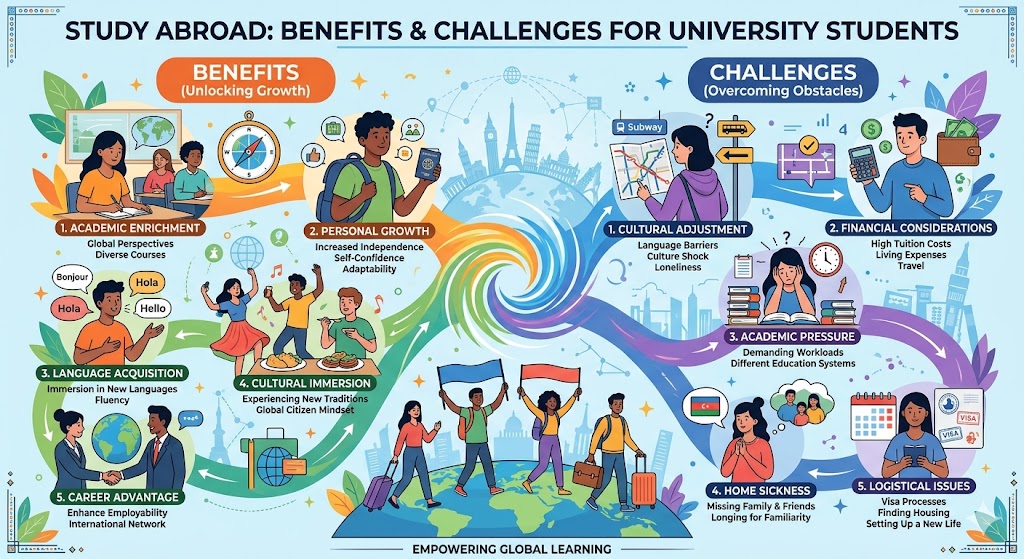
Studying abroad has become one of the most transformative experiences for university students. It offers exposure to new academic systems, cultures, and career opportunities, while also presenting personal and practical challenges. Understanding both sides helps students make informed decisions.
1. Academic Benefits of Studying Abroad
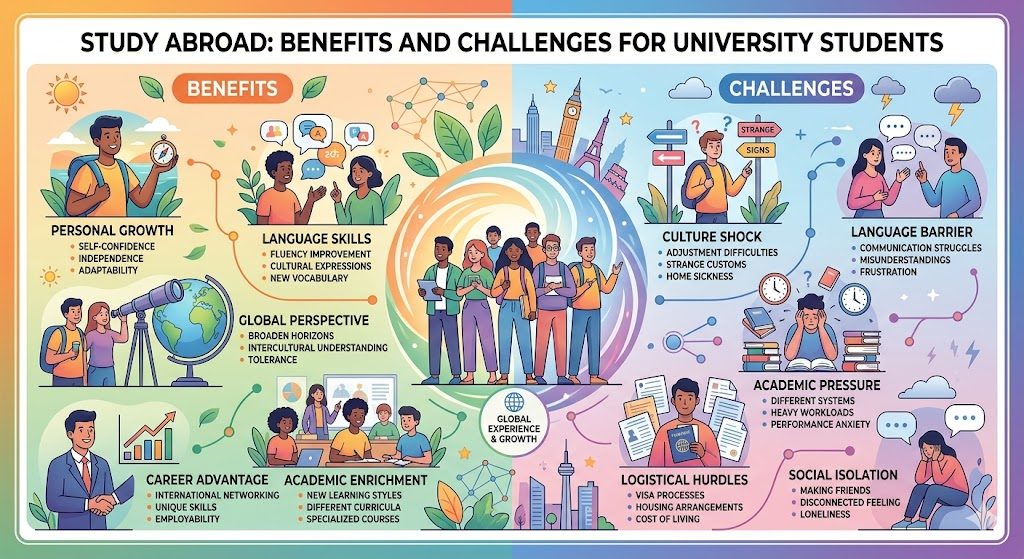
One of the biggest advantages of studying abroad is access to diverse education systems. Many universities offer specialized courses, advanced research facilities, and teaching methods that differ from a student’s home country.
Students often experience:
- More interactive and research-based learning
- Exposure to global academic standards
- Opportunities to work with international faculty
- Access to niche or advanced programs not available locally
This academic diversity helps students broaden their thinking and develop critical problem-solving skills.
2. Personal Growth and Cultural Exposure
Living in a foreign country pushes students out of their comfort zones. They learn to adapt to new environments, cultures, and lifestyles.
Key personal benefits include:
- Increased independence and self-confidence
- Improved cross-cultural communication skills
- Greater adaptability and resilience
- A broader worldview and cultural awareness
Experiencing different traditions, languages, and social norms helps students become more open-minded and globally aware individuals.
3. Career Opportunities and Global Networking
A study abroad experience can significantly enhance a student’s career prospects. Employers often value international exposure as it demonstrates flexibility and global understanding.
Students can benefit from:
- International internships and job opportunities
- Stronger professional networks across countries
- Improved language and communication skills
- A competitive edge in the global job market
Networking with peers and professionals from different backgrounds can open doors to global career paths.
4. Challenges Faced by International Students
Despite its advantages, studying abroad also comes with challenges that students must prepare for.
Common difficulties include:
- High tuition and living costs
- Homesickness and emotional stress
- Language barriers in daily life and academics
- Cultural adjustment issues
- Visa and immigration complications
Managing these challenges requires strong emotional resilience, planning, and support systems.
Conclusion
Studying abroad is a life-changing experience that offers significant academic, personal, and professional benefits. However, it also requires careful preparation to overcome financial, cultural, and emotional challenges. Students who balance both sides effectively can gain invaluable skills and experiences that shape their future success.