
The Future of Global Education: Online + On-Campus Hybrid Degrees
Hybrid degrees combine online learning with short on-campus experiences, creating a flexible and global education model. They reduce costs, increase access to top universities, and improve career readiness by blending digital tools, AI-driven learning, and real-world exposure.


6
Global education is undergoing one of its biggest transformations in decades. The traditional model—where students either attend campus full-time or study fully online—is rapidly being replaced by a hybrid degree system, combining the strengths of both formats.
In 2026 and beyond, universities are not just “adding online classes.” They are redesigning entire degree structures around flexibility, global access, and real-world skills. This shift is creating a new era of learning that is more accessible, more international, and more career-focused than ever before.
1. What Are Hybrid + Online On-Campus Degrees?
Hybrid degrees combine:
- Online learning (lectures, assignments, discussions, exams)
- On-campus experiences (labs, workshops, networking, internships, residencies)
Instead of staying in one place for 3–4 years, students may:
- Study online from their home country
- Travel abroad for short campus sessions
- Complete industry projects in partner companies
This model is often called a “phygital” education system (physical + digital learning), now becoming mainstream in higher education.
2. Why Hybrid Education Is Growing So Fast


6
Several global forces are driving this shift:
• Flexibility for modern students
Students today often balance part-time jobs, internships, and entrepreneurship. Hybrid learning allows them to study without pausing their lives.
• Rising cost of traditional education
Full-time international study is expensive. Hybrid degrees reduce living costs by limiting time spent on campus.
• Technology advancement
AI tutors, virtual classrooms, and cloud-based labs now make online learning highly interactive and practical.
• Global access to universities
A student in India can now start a degree from home and later attend campus sessions in the UK, US, or Europe.
3. The “Phygital Campus” Revolution
Modern universities are no longer limited to buildings. They are becoming global learning networks.
A typical hybrid program may include:
- Online lectures recorded by top professors
- Live global classrooms with students from multiple countries
- Short campus residencies for hands-on training
- Virtual labs for science, engineering, and business simulations
This structure helps universities scale globally without building massive physical campuses everywhere.
4. How Hybrid Degrees Work in Real Life


6
A typical hybrid degree is structured like this:
Year 1–2: Online Foundation
Students learn core subjects through:
- Recorded lectures
- Interactive quizzes
- AI-assisted learning platforms
- Virtual group projects
Year 2–3: Blended Learning
Students begin:
- Short campus visits
- Industry internships
- Collaborative research projects
Final Year: On-Campus Immersion
Students may spend a semester abroad or on campus completing:
- Final projects
- Thesis or capstone work
- Career placements
This system ensures students gain both theoretical knowledge and practical exposure.
5. Benefits of Hybrid Global Degrees
1. Access to top universities worldwide
Students can study from prestigious institutions without relocating permanently.
2. Lower cost of education
Reduced housing, travel, and relocation costs make education more affordable.
3. Better career readiness
Students gain real-world experience through internships and global exposure.
4. Flexible learning pace
Many programs now support self-paced modules and competency-based learning.
5. Stronger global networking
Students connect with peers, professors, and employers across multiple countries.
6. Challenges in Hybrid Education
Despite its benefits, hybrid learning also has challenges:
• Digital divide
Not all students have equal access to high-speed internet or devices.
• Self-discipline required
Online learning demands strong time management and motivation.
• Accreditation differences
Not all hybrid degrees are equally recognized worldwide.
• Campus experience limitation
Some students miss full-time social and cultural immersion.
Universities are actively working to solve these issues through better platforms and student support systems.
7. Role of AI in Hybrid Learning


8
Artificial Intelligence is becoming the backbone of hybrid education:
- AI tutors explain complex topics in simple language
- Adaptive systems personalize lessons for each student
- Automated grading speeds up feedback
- Predictive analytics track student performance
This makes hybrid education more efficient and personalized than traditional classrooms.
8. How Employers View Hybrid Degrees
The perception of hybrid education is changing quickly.
Today, employers mainly care about:
- Skills and practical ability
- Internship experience
- Accreditation of the institution
- Real-world problem-solving ability
The format (online, hybrid, or on-campus) matters less than what the student can actually do.
9. Future Trends in Global Education (2026 and Beyond)


6
The next decade will bring even more changes:
• Micro-degrees and stackable credentials
Students will build degrees step-by-step through short certifications.
• Fully global classrooms
A single class may include students from 20+ countries.
• VR and AR campuses
Virtual reality labs will simulate real-world environments.
• Lifelong learning models
Degrees will not be one-time events but continuous updates throughout careers.
Conclusion
The future of global education is no longer “online vs offline.” It is a blended ecosystem where learning happens everywhere—on screens, on campuses, and in real-world environments.
Hybrid degrees are reshaping how students:
- Access education
- Build careers
- Connect globally
- Develop skills
As technology continues to evolve, the most successful education systems will be those that combine flexibility, accessibility, and real-world experience into one seamless journey.
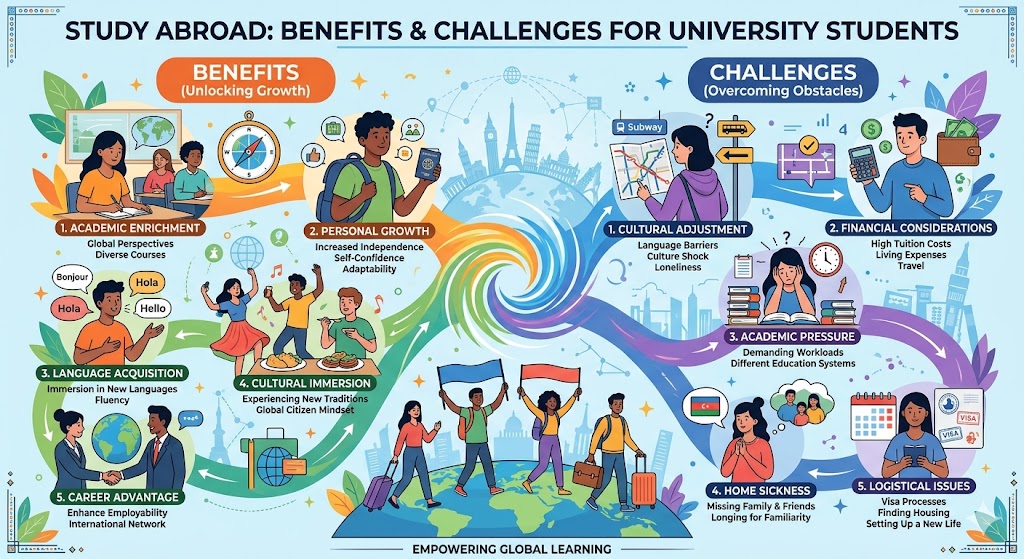
Study Abroad: Benefits and Challenges for University Students
Studying abroad has become one of the most transformative experiences for university students. It offers exposure to new academic systems, cultures, and career opportunities, while also presenting personal and practical challenges. Understanding both sides helps students make informed decisions.
1. Academic Benefits of Studying Abroad
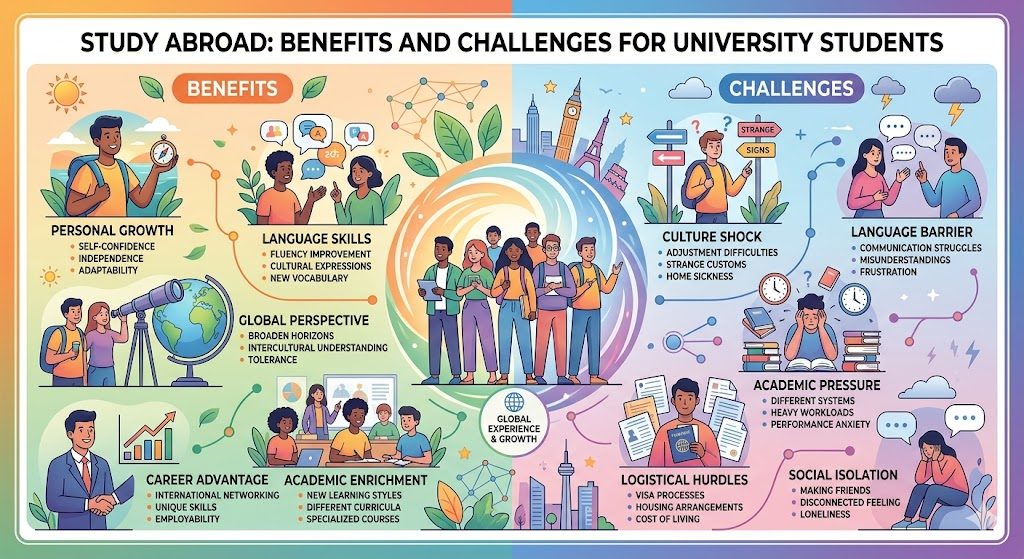
One of the biggest advantages of studying abroad is access to diverse education systems. Many universities offer specialized courses, advanced research facilities, and teaching methods that differ from a student’s home country.
Students often experience:
- More interactive and research-based learning
- Exposure to global academic standards
- Opportunities to work with international faculty
- Access to niche or advanced programs not available locally
This academic diversity helps students broaden their thinking and develop critical problem-solving skills.
2. Personal Growth and Cultural Exposure
Living in a foreign country pushes students out of their comfort zones. They learn to adapt to new environments, cultures, and lifestyles.
Key personal benefits include:
- Increased independence and self-confidence
- Improved cross-cultural communication skills
- Greater adaptability and resilience
- A broader worldview and cultural awareness
Experiencing different traditions, languages, and social norms helps students become more open-minded and globally aware individuals.
3. Career Opportunities and Global Networking
A study abroad experience can significantly enhance a student’s career prospects. Employers often value international exposure as it demonstrates flexibility and global understanding.
Students can benefit from:
- International internships and job opportunities
- Stronger professional networks across countries
- Improved language and communication skills
- A competitive edge in the global job market
Networking with peers and professionals from different backgrounds can open doors to global career paths.
4. Challenges Faced by International Students
Despite its advantages, studying abroad also comes with challenges that students must prepare for.
Common difficulties include:
- High tuition and living costs
- Homesickness and emotional stress
- Language barriers in daily life and academics
- Cultural adjustment issues
- Visa and immigration complications
Managing these challenges requires strong emotional resilience, planning, and support systems.
Conclusion
Studying abroad is a life-changing experience that offers significant academic, personal, and professional benefits. However, it also requires careful preparation to overcome financial, cultural, and emotional challenges. Students who balance both sides effectively can gain invaluable skills and experiences that shape their future success.